











When does fully automated sorting make sense?
Text Katrien De VochtImage Remmert GmbH
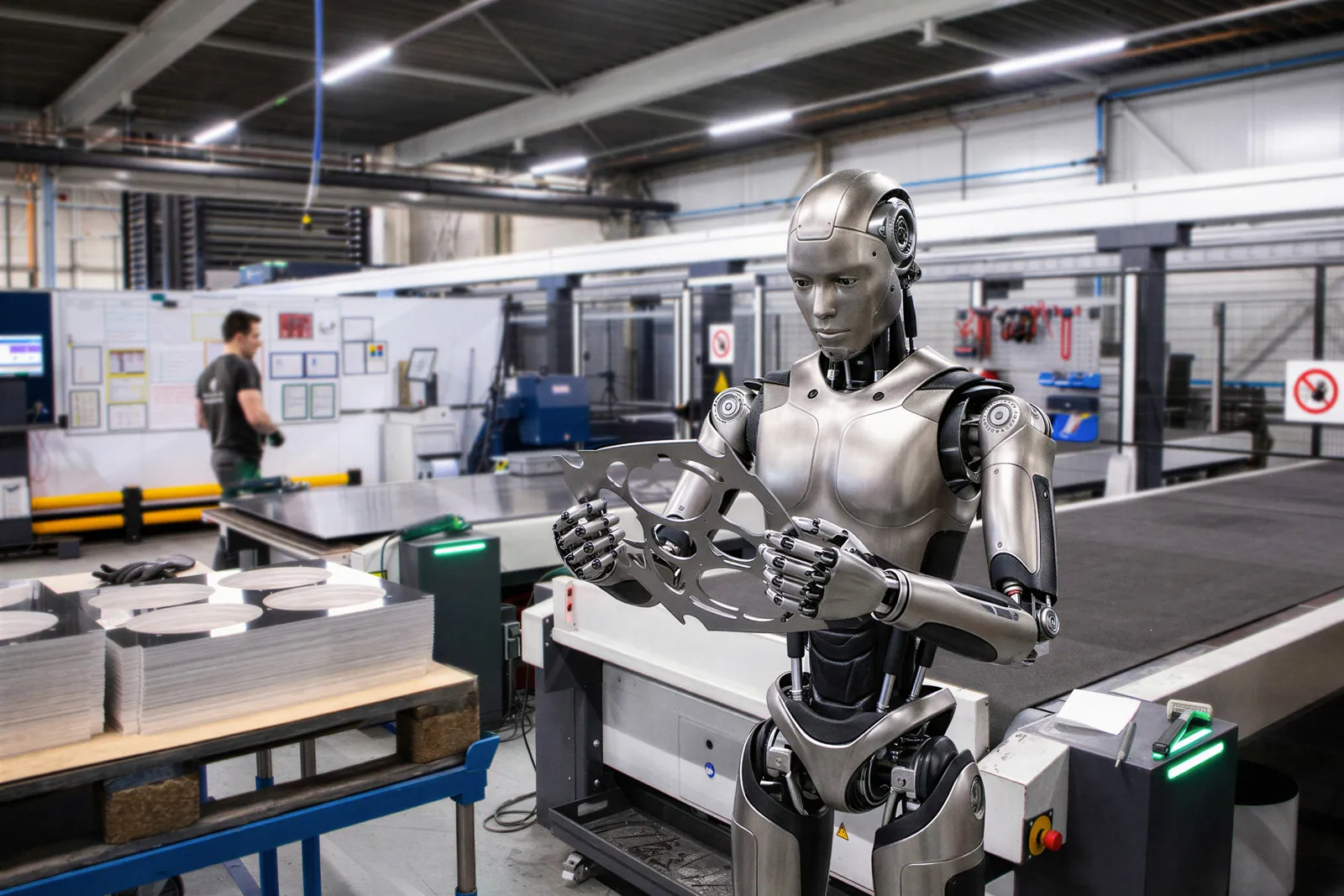
Loading laser cutting machines is now largely automated. But once parts need to be separated from the sheet, sorted and stacked, manual work is often still required. This is where the sector faces challenges such as labour shortages, rising wage costs and growing competitive pressure. Automated sorting systems are therefore gaining popularity. But are they a necessary next step, or an investment whose return is not always certain?
“Many sheet metal processors have already fully automated sheet changing, often in combination with a storage system. However, parts are still sorted manually surprisingly often,” says Remmert GmbH, a specialist in intelligent storage and logistics systems for the metalworking industry.
Not everything needs to be fully automated straight away
Manual sorting is labour-intensive and physically demanding. Operators have to separate parts, sort, stack and move them, which takes a great deal of time, especially with larger parts. Sorting is therefore often regarded as a task that is typically ‘dull, dirty and dangerous’, and companies sometimes assign several employees to it per shift.
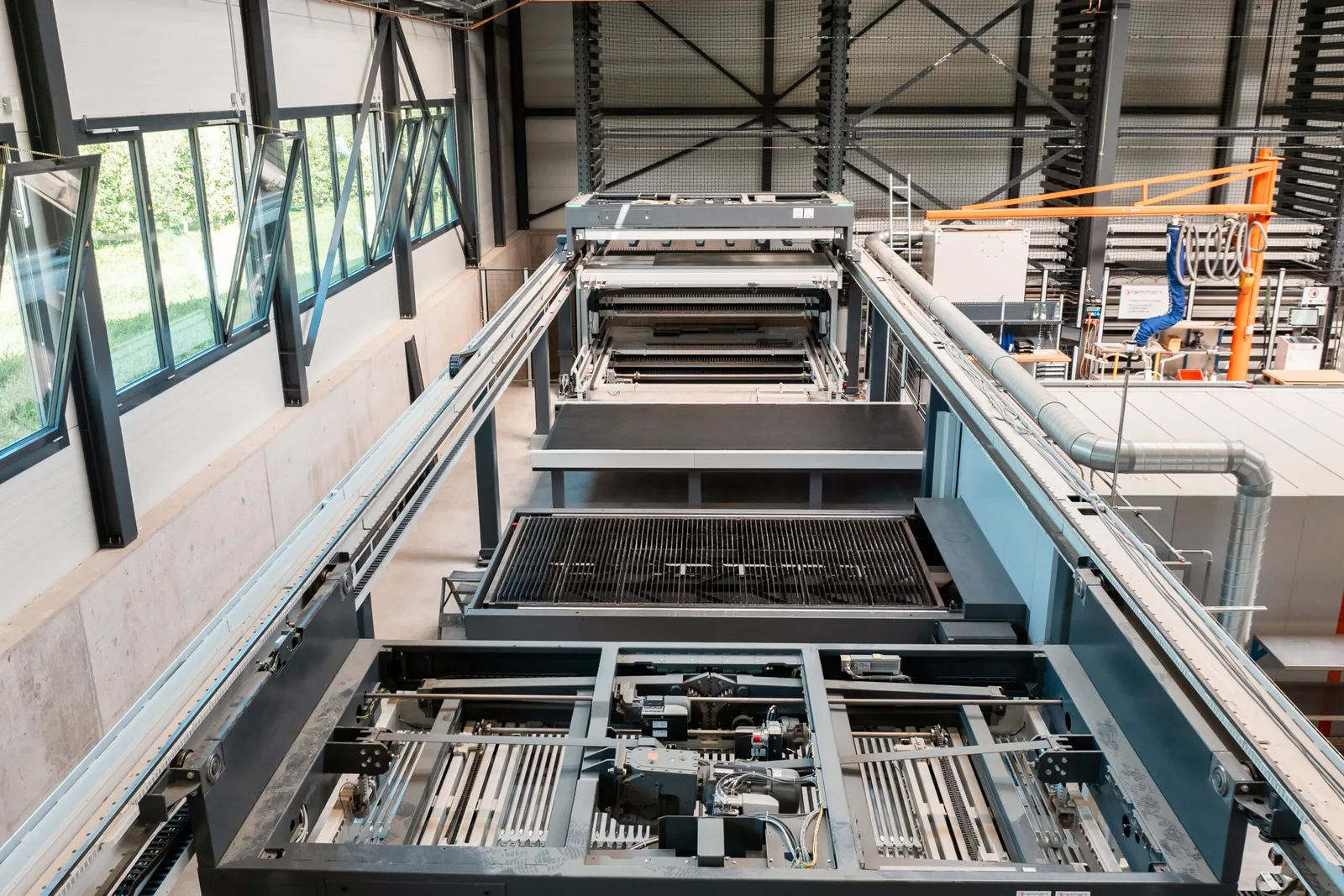
Remmert points out that full automation does not always have to be the first step. Intermediate solutions can also deliver significant efficiency gains. Conveyor systems improve ergonomics, while decentralised sorting stations separate the cutting and sorting processes. In addition, semi-automatic systems can palletise heavy parts automatically, leaving operators to focus on smaller pieces. These solutions help companies get more out of their existing automation without making major investments straight away.
The rise of fully automated sorting systems
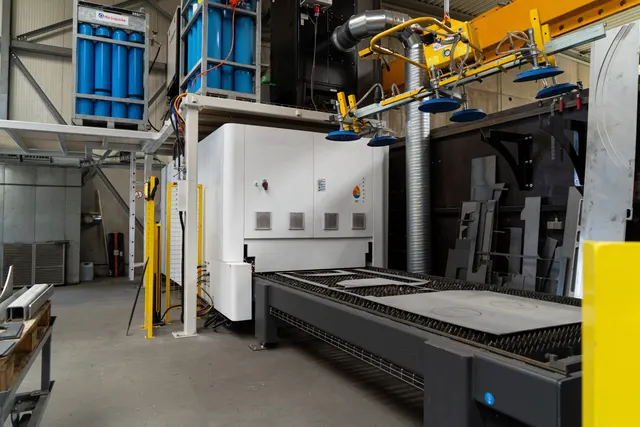
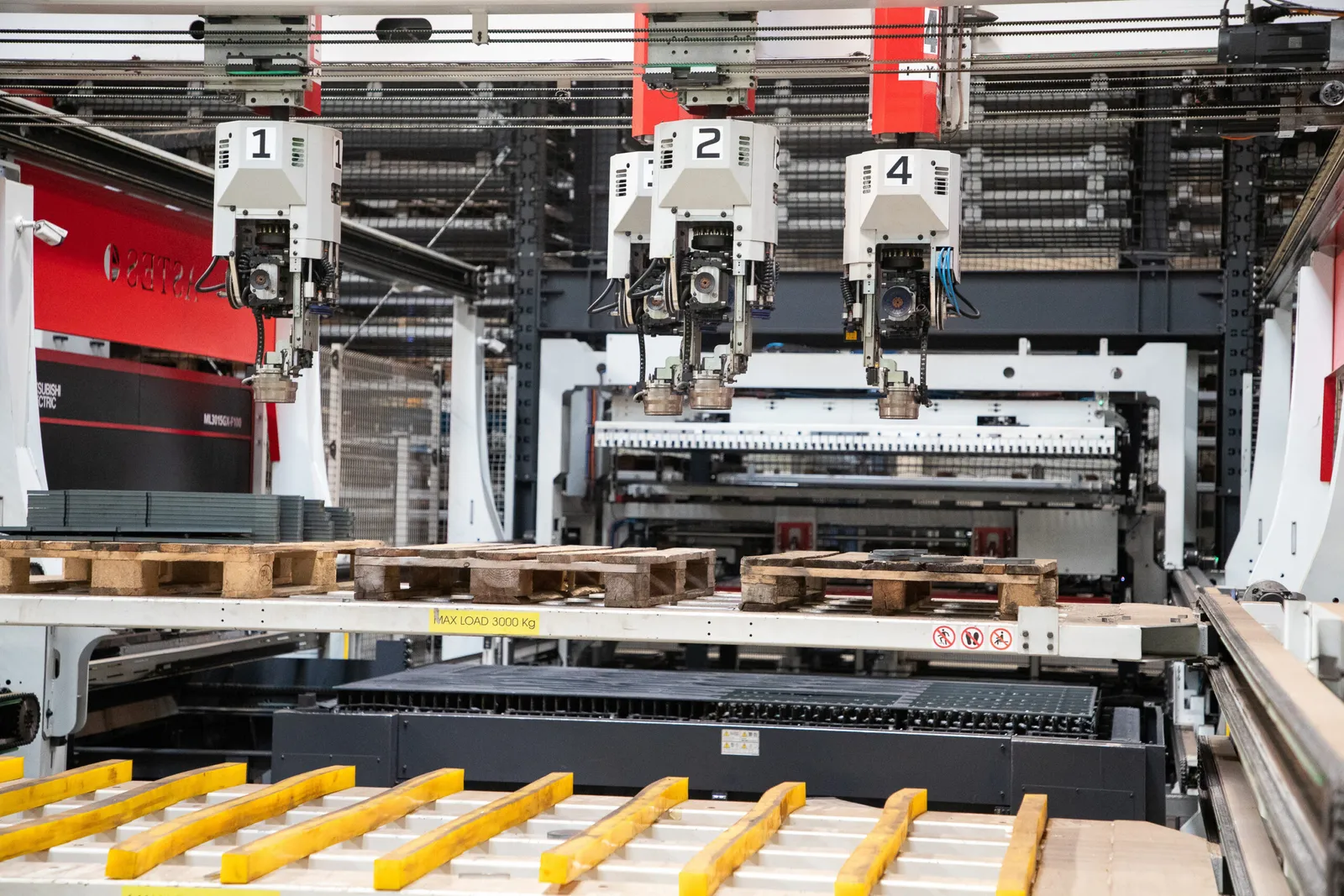
A range of technologies is now available to companies looking to automate further. Gantry robots in particular have proved their worth in automatically picking up and sorting sheet metal parts. Using vacuum or magnetic grippers, these systems remove parts directly from the cutting plan and automatically place them on pallets or in storage locations. Specialised software analyses the entire cutting plan and automatically determines which parts are picked up, when and where.
Software plays a crucial role here. It controls not only the robot movements, but also the nesting and, sometimes, even the design of parts must be adapted for automated processing.
More than just an investment decision
A fully automated sorting system typically requires an investment of between 400,000 euros and one million euros. The potential labour savings are considerable, but Remmert says the decision should never be based solely on labour costs. Technical feasibility, machine capacity, available space and material flows all need to be carefully analysed. Human intervention also remains necessary when parts tip over, get stuck or other exceptions occur.
Developments are moving quickly. More powerful lasers are boosting production speeds, while new generations of software and 3D vision systems are becoming increasingly intelligent. Humanoid robots are also being mentioned more and more often as a possible future solution for flexible sorting work.
Automated sorting of sheet metal parts remains one of the most complex challenges in sheet metal processing. There is no one-size-fits-all solution. Remmert is actively researching these developments and developing innovative storage, automation and transport solutions to further optimise material flows within metalworking companies. By integrating automation flexibly into existing production environments, Remmert helps companies prepare for the factory of tomorrow.
At Euroblech
See what this looks like in practice this October at Euroblech (Hall 12, Stand D76). Integrated solutions in action: storage technology, material flow and production processes brought together in one intelligently connected system. Success comes from the seamless interaction of storage, order picking and machine integration. At its stand, Remmert will present this through a 3D visualisation that lets visitors explore configurations interactively, from material infeed to machine feeding, tangible at scale and from every angle. For manufacturing companies, this practical approach offers a concrete starting point: what might an integrated solution of their own look like? Come and see.
Euroblech stand number H12-D76
Have a business enquiry for Remmert GmbH? Get in touch
Companies in this story
Keep following this
Get an email when a new story is published. No account needed.
- ThemeShop floor automation
- SubjectSheet metalworking
- CompanyRemmert GmbH