











Automating grinding processes: consistent quality with force compliance
Text Ingrid Bronsema, Evi HussonImage Metaaltechniek handelsonderneming
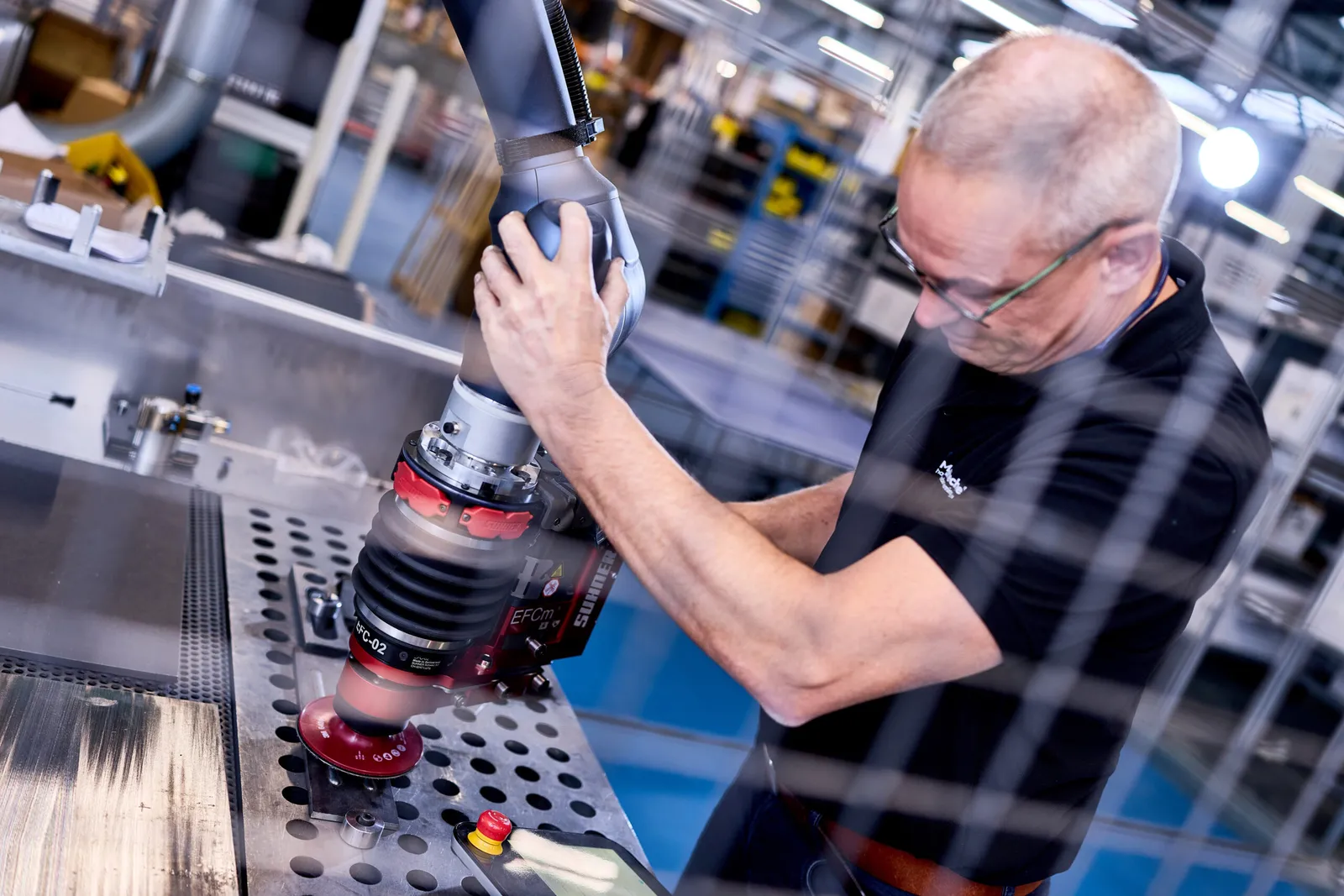
Automating grinding and deburring was a challenge for a long time. Modern force-compliance systems offer an effective solution.
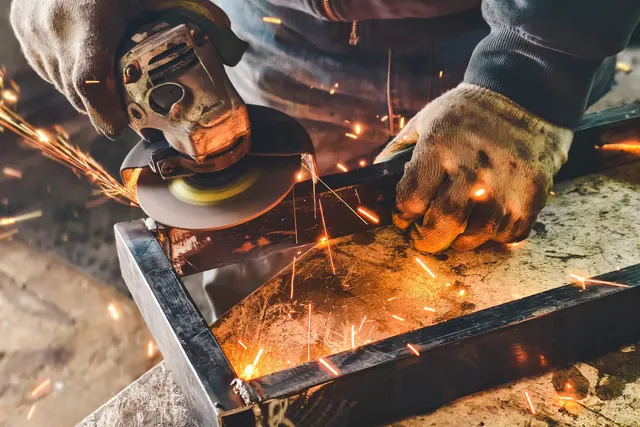
The metal industry is increasingly focusing on automating finishing processes. Automating grinding processes is proving to be a complex task. One crucial but often underestimated cause lies in the preceding process: welding. In practice, automated grinding and abrasive finishing are only profitable and reliable when weld seams are also deposited robotically. Manual welding results in an uneven weld profile, variations in weld height and width, and irregular contours. This leaves no stable starting point for an automated finishing process. As a result, programming work increases, the process becomes less predictable and the risk of rejection rises. Even small dimensional differences between workpieces, abrasive wear and variations in clamping affect the quality of the finishing process. Modern force-compliance systems now offer an effective solution.
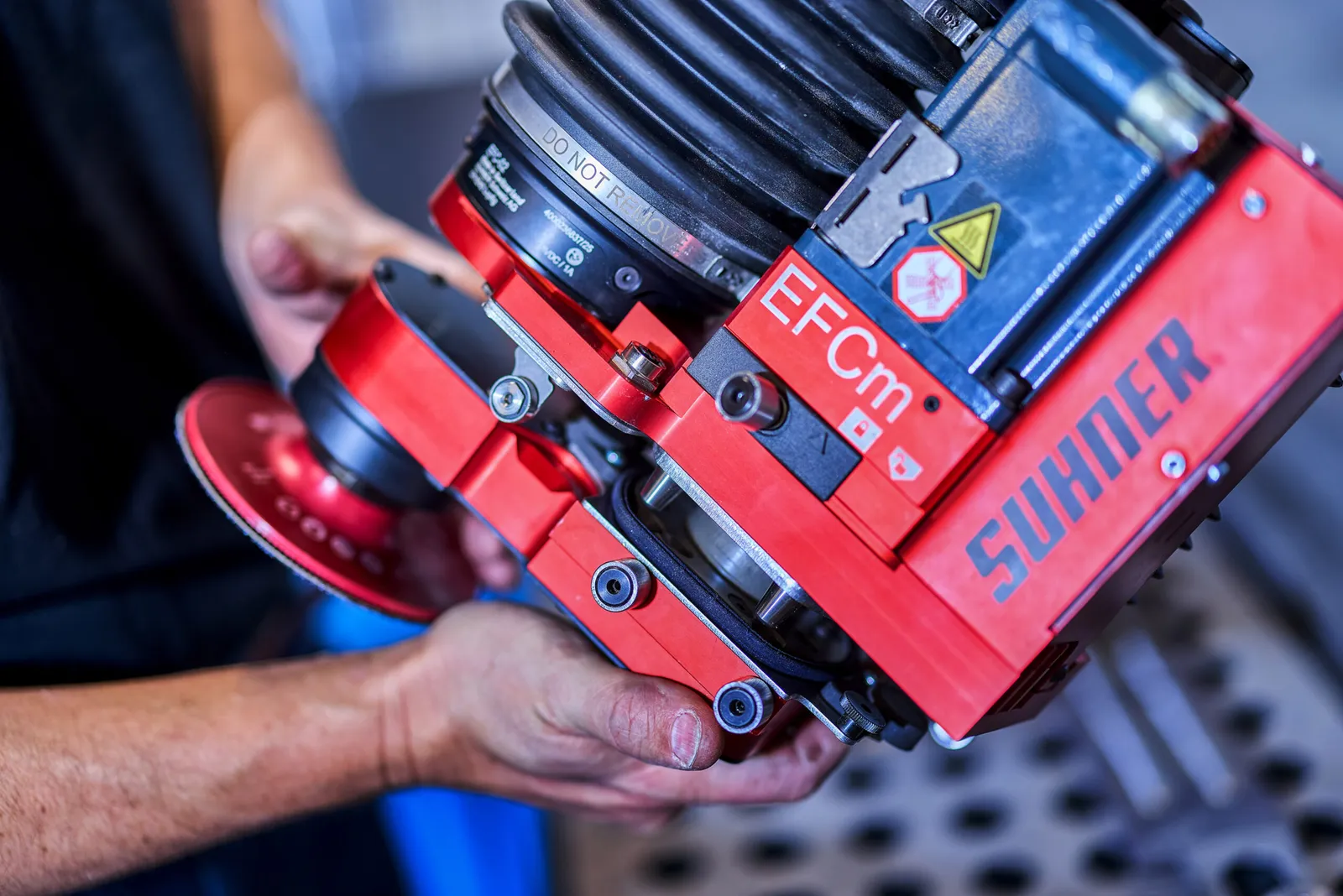
Constant pressure, consistent results
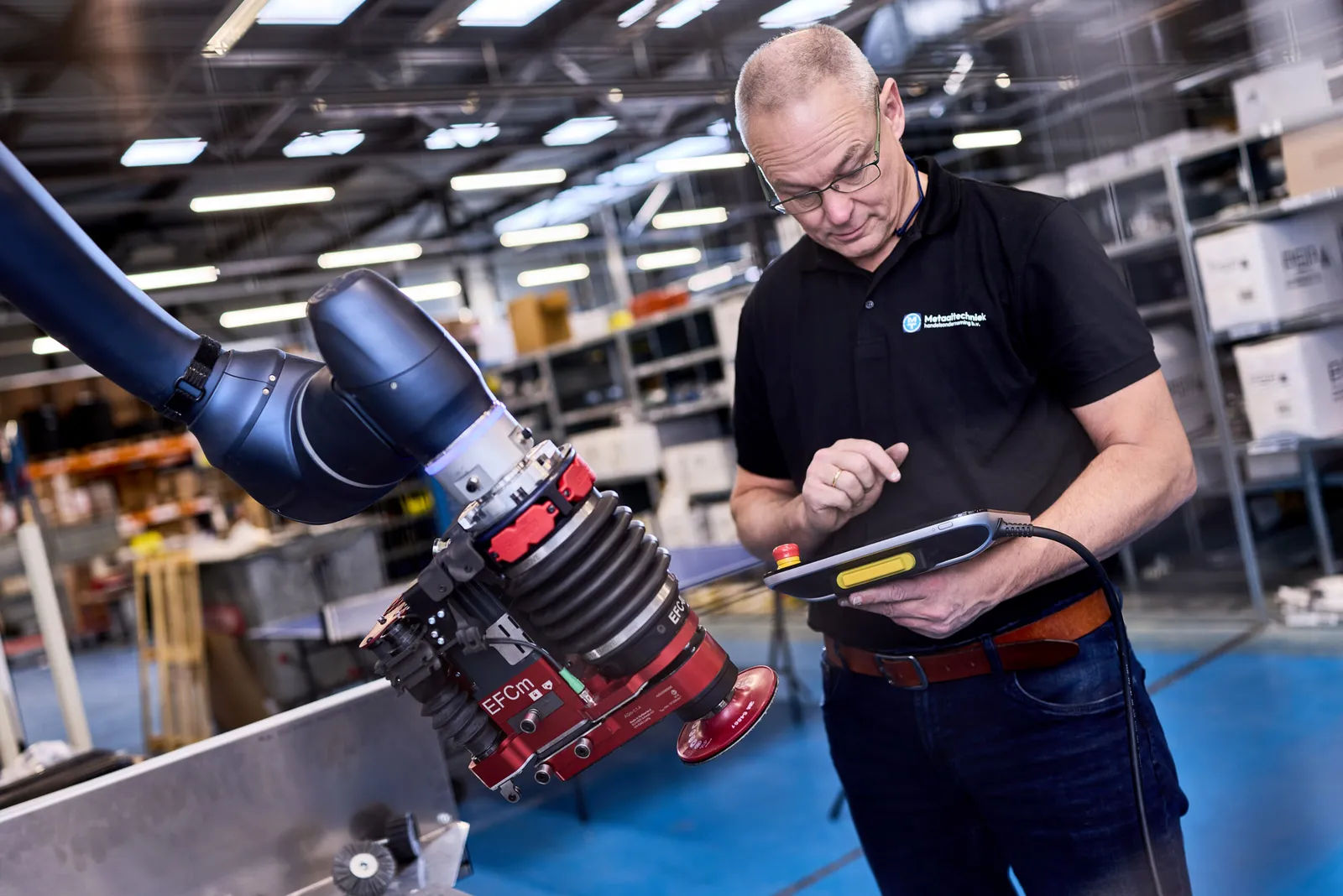
A well-known example is the Suhner Force Compliance Unit. This system enables grinding and deburring processes to be carried out using an industrial robot, while maintaining constant contact pressure between the tool and workpiece. An electronically controlled movement is added in the Z direction. The set force remains constant throughout the process, ensuring that the abrasive belt, grinding disc or flap disc operates under the same conditions every time. This enables the robot to compensate for small deviations in product geometry without compromising quality. For the user, this means repeatable processes and surface quality that varies very little between individual workpieces. This repeatability is particularly important for companies working in machine building, the transport equipment industry, sheet metal fabrication or the manufacture of structural components. Quality becomes more consistent, and reliance on manual skill is reduced.
Highly consistent results
A key advantage of force-compliance technology is the high accuracy of the end result. With contact pressure kept constant, along with the movement of the robot arm, the result is a uniform grinding pattern across the entire product. The risk of human error is also significantly reduced. A robot repeats exactly the same movements, while the force-compliance unit compensates for small dimensional variations. As a result, an automated grinding cell can often deliver quality that is not only more consistent than manual work, but also easier to demonstrate within quality assurance systems.
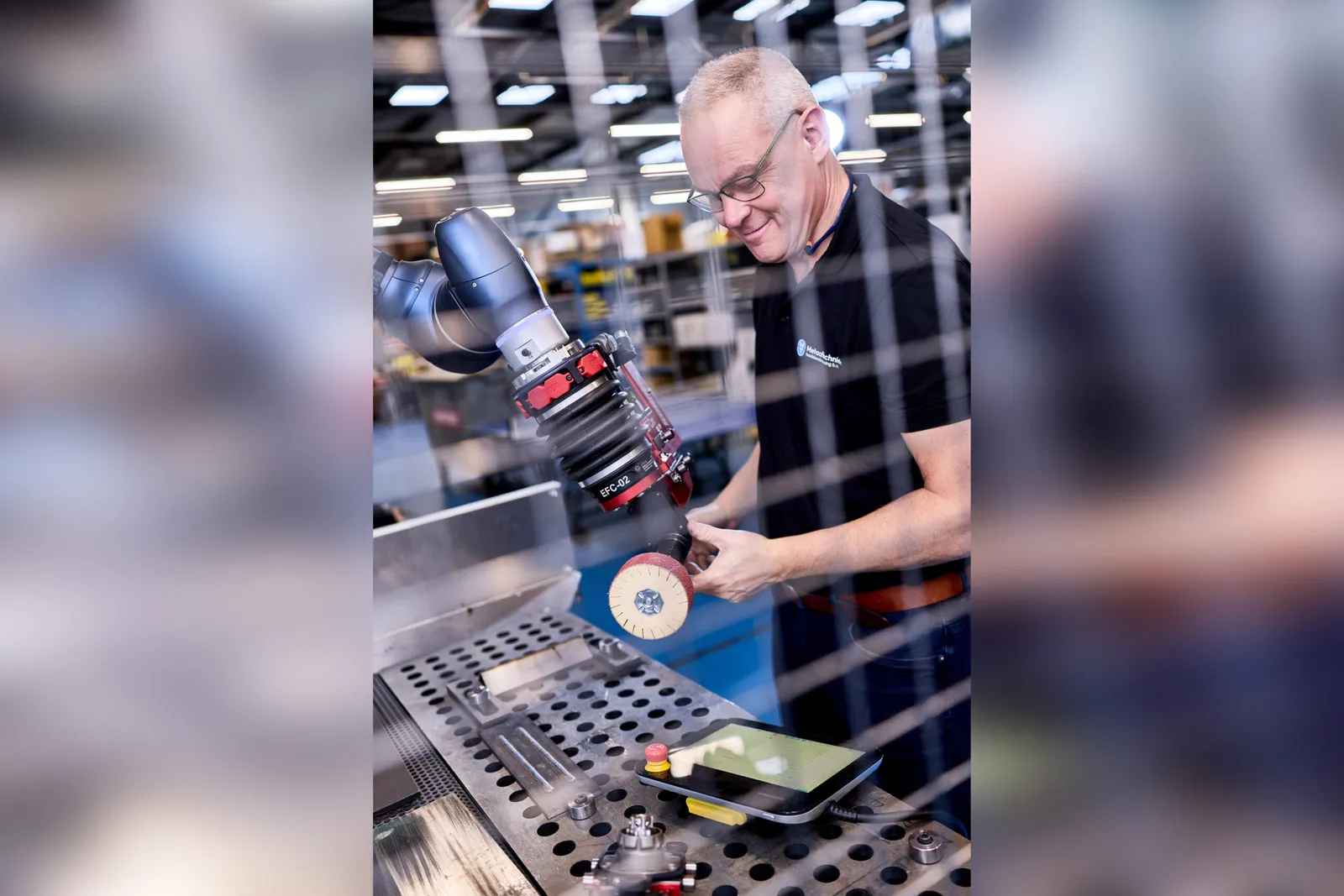
Longer abrasive life
Controlled process force ensures that the abrasive is used much more evenly. Overloading is prevented and heat generation is easier to control. In practice, this often results in a significantly longer service life for abrasive belts, flap discs and other consumables. A longer abrasive life not only reduces direct tooling costs, but also cuts unplanned downtime caused by consumable changes. The process also becomes more predictable, positively affecting planning and overall productivity.
Particularly attractive for larger batches
These benefits do, however, come with a relatively high investment threshold. A complete robot cell with a force-compliance system, grinding machine, tool changing stations, disc changers, magazines, safety equipment and programming requires substantial investment. Implementation also calls for process expertise and careful optimisation of parameters such as contact force, path speed and tool selection. This technology is therefore particularly attractive to companies working with larger batch sizes or a continuous flow of similar products. In these situations, higher productivity, consistent quality and lower tooling costs result in an acceptable payback period. For small batches or highly variable products, manual grinding often remains more economical. However, this threshold is steadily shifting thanks to improved offline programming and the increasing flexibility of modern robotic systems.
Fully automated metalworking
Systems such as the Suhner Force Compliance Unit are making the automation of grinding processes in the metal industry increasingly viable. The solution is an important step towards fully automated metalworking
Een zakelijke vraag aan Metaaltechniek Handelsonderneming BV? Get in touch
Companies in this story
Keep following this
Get an email when a new story is published. No account needed.
- ThemeMetal finishing and protection
- SubjectSurface treatment
- CompanyMetaaltechniek Handelsonderneming BV