











Smart new options for laser cutting: less time and labour
Text Valérie CouplezImage Wouters Cutting & Welding
The sky seems to be the limit for laser cutting machines these days. Alongside the race for higher power, new laser cutting heads are emerging for bevel cutting. This opens the door to new possibilities, but at a hefty price. MicroStep takes the opposite approach. Its R&D team started with the existing set-up to take laser cutting to the next level. Meet two new standard features, WyeHole and WyeContour, and find out how they can save you time and money.
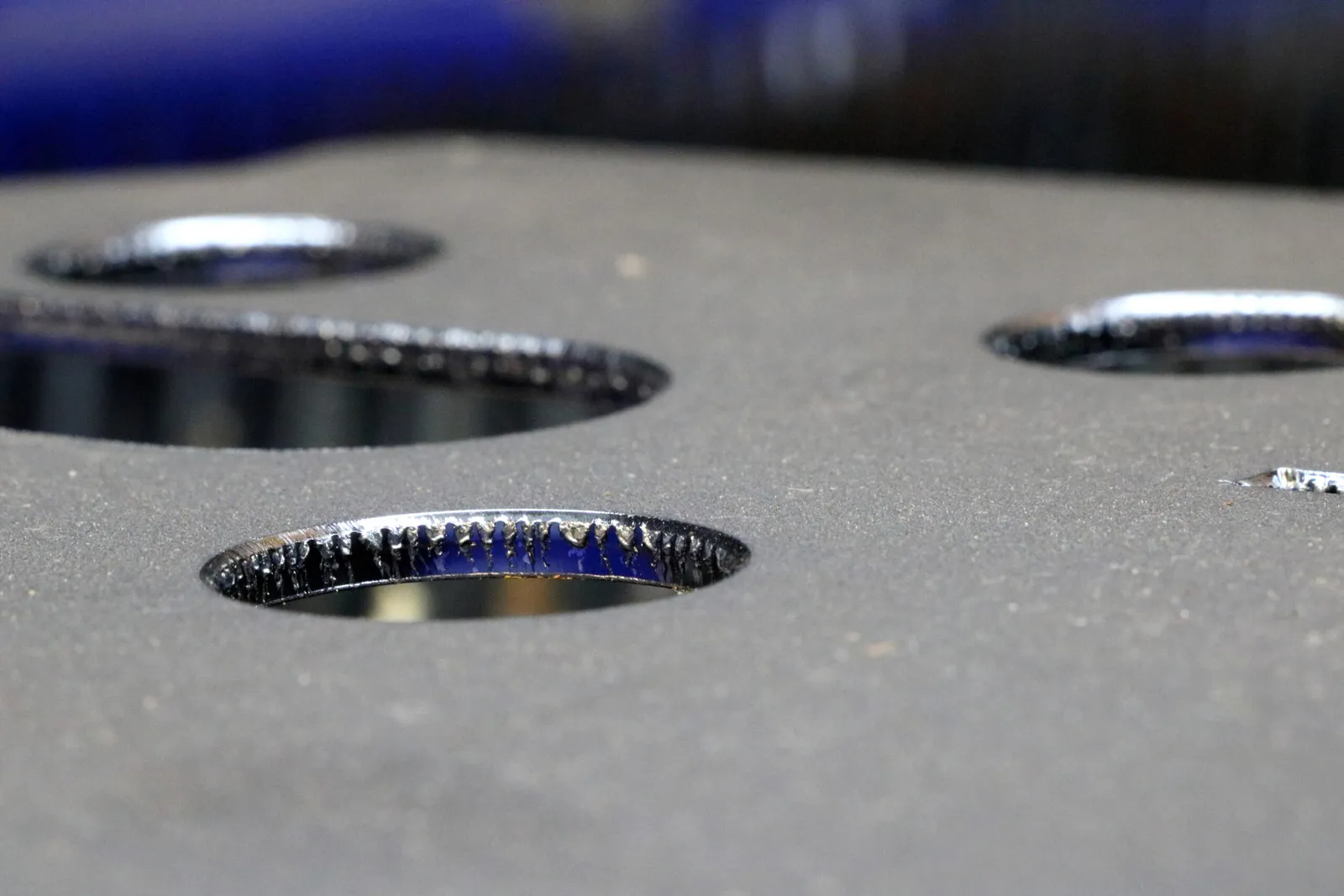
Since the start of this year, MicroStep laser cutting machines have been equipped with WyeHole. “Many customers want to make countersunk holes in their plates. They either need an expensive bevel cutting head for this, or the work has to be done manually afterwards, which takes time and affects efficiency. By taking a deep dive into the technology, MicroStep found a way to make these countersunk holes using a straight cutting head. It cannot do everything: you will still need a bevel head for larger bevels, but this is a great feature for most metal fabricators. No extra steps, no additional operations, just done in one go,” says managing director Nic Wouters, summing up the benefits.
Everything pre-programmed
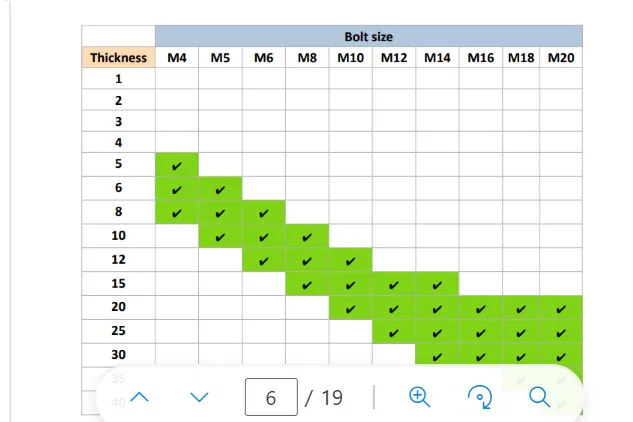
MicroStep achieves this with a two-step process. “The hole is cut out first, then the laser beam goes back around it in stages to remove material and create the bevel,” explains Cutting & Welding product specialist Stijn Peeters. “The cut will feel a little rougher on the inside as a result, but that does not matter to most customers.” The diameters you can make depend on the plate thickness. This is summarised in a handy table. “The operator does not need a degree in advanced mathematics to calculate it correctly; everything is already programmed into the control system.” It was clear at the Demo Days in June that interest is high. “Metal fabricators are really looking for ways to make their laser cutting process even more efficient,” says Peeters.
Cutting and edge rounding in one
The second new MicroStep feature is a perfect fit for another emerging trend. Wouters says: “Laser-cut parts often have sharp edges. This creates two challenges, in terms of safety and quality. On the one hand, employees can injure themselves on those sharp edges. On the other, paint will not adhere as well. You can do this manually or install a machine alongside the laser to deburr and round the edges, but that costs time and money.”
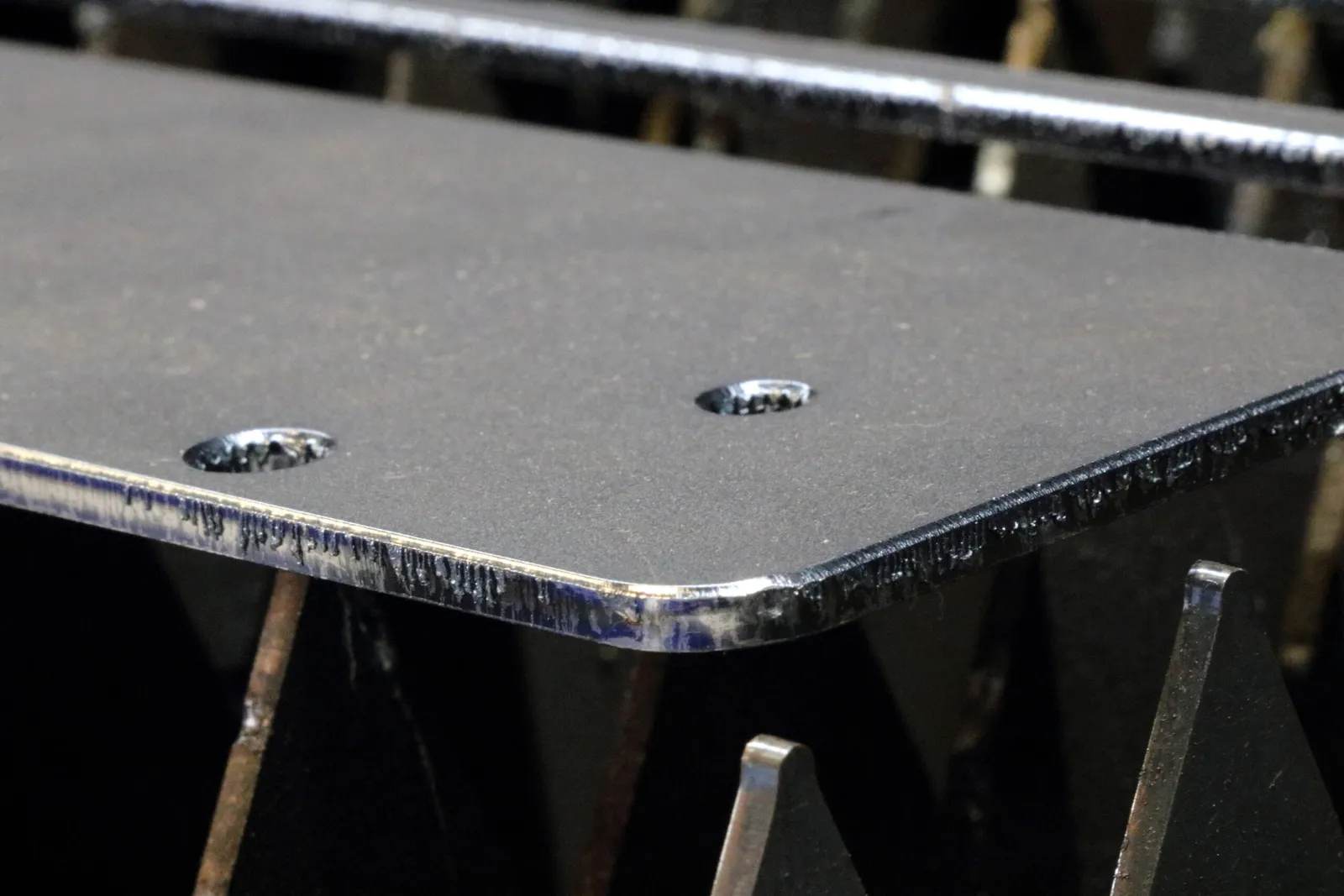
With WyeContour, by contrast, edge rounding takes place automatically during the cutting process. “No extra finishing. No additional steps. Just a safe end product with a better base for a coating or paint,” says Wouters. The principle is the same as with WyeHole. “After the cut, the laser beam passes over it again, just long enough to break the top edges of the plate by creating a small V. This can save a lot of work for anyone who needs a small amount of edge rounding,” adds Peeters.
Automatic sorting
Another clear trend in laser cutting is automation. “The biggest bottleneck in the cutting process today is sorting the parts. MicroStep has now developed a very compact solution: a robot on the shuttle table that can pick parts weighing up to 100 kilos from the sheet and place them on pallets,” says Wouters. This means minimal extra work for the cutting machine operator. The only requirement is that the parts are loose and the weight limit is not exceeded. The sheet thickness itself does not matter.
“The machine already knows the nesting. You only need to specify which parts should go in which positions on the pallet. Everything is then neatly stacked straight after cutting, ready for dispatch or the next operation. There is also a tool changer for the grippers, allowing you to switch between clamps, magnets and suction cups.”
Bespoke solutions
Is this not quite the automation you had in mind? Are your parts heavier? Or does the process need an extra boost with a second robot? The great thing about MicroStep and Wouters Cutting & Welding is that they are keen to work with their customers to find the right solution. “We know how important it is to eliminate as many manual operations as possible, given the shortage of technically skilled staff. That is why we work with our customers to find out exactly what they need to make this possible, whether through standard solutions or a degree of customisation. In other words, there is no excuse not to automate,” Wouters concludes with a wink.
Een zakelijke vraag aan Wouters Cutting & Welding? Get in touch
Companies in this story
Keep following this
Get an email when a new story is published. No account needed.
- ThemeFaster, more accurate sheet metal processing
- SubjectSheet metalworking
- CompanyWouters Cutting & Welding