




Ergonomics in manufacturing: how Arcadel reduces physical strain and staff absence
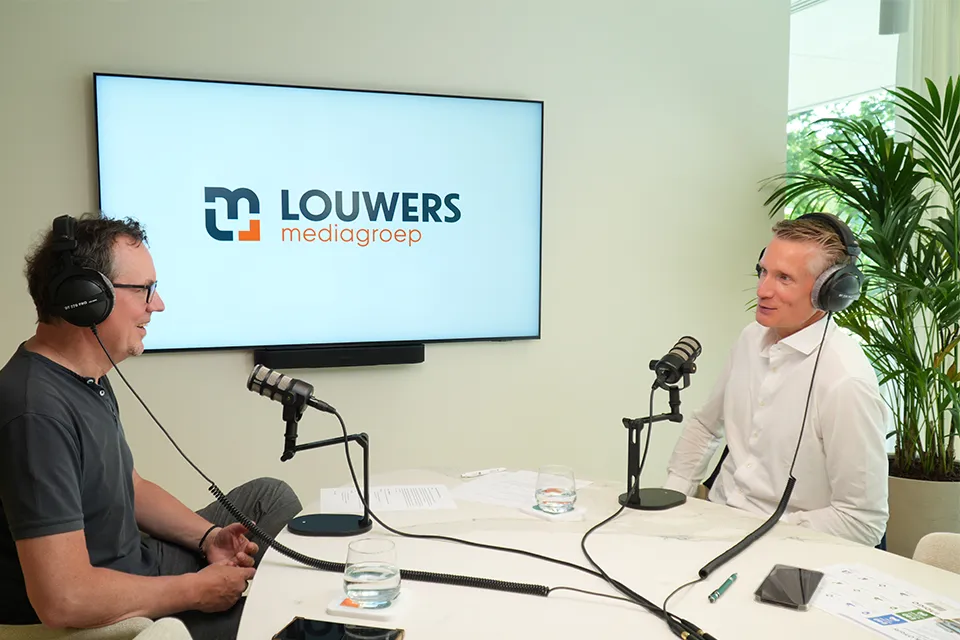
A conversation with Thierry Reversé: Host: Kris Vandekerckhove
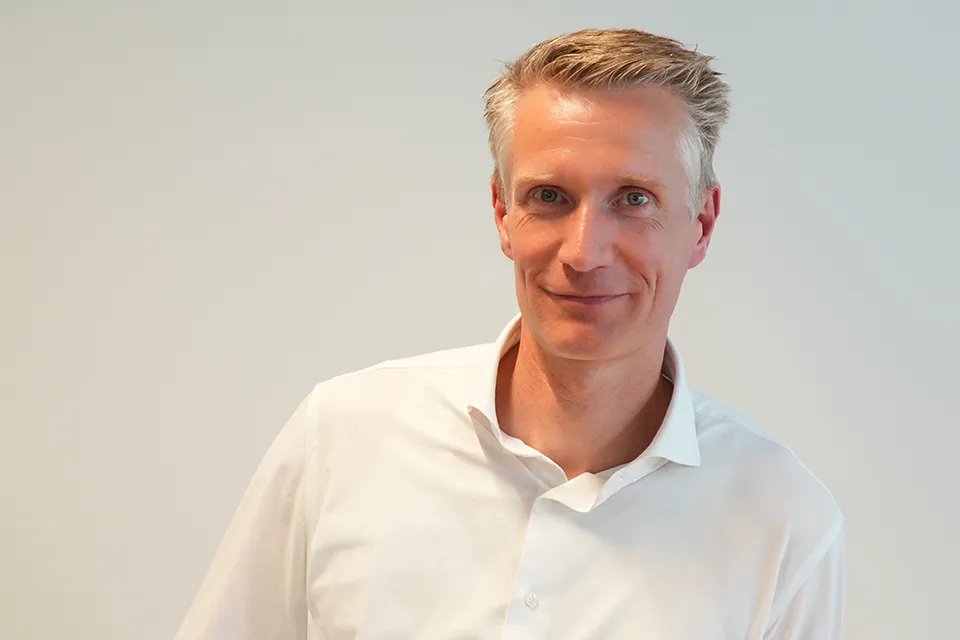
How can you improve workplace ergonomics without compromising efficiency? In this episode, Thierry Reversé, managing director of Arcadel in Roeselare, explains how pneumatic manipulators help companies move heavy loads ergonomically. From manufacturing businesses to logistics environments, smart lifting aids reduce physical strain, prevent staff absence and improve job satisfaction. Through practical examples from companies including DAF Trucks and Brustor, you’ll discover how ergonomic solutions contribute to safer, more productive workplaces.
Een zakelijke vraag aan Arcadel? Get in touch
Full transcript
All chapters (14)
- Introducing ergonomics in manufacturing environments
- What Arcadel does
- How Thierry Reversé came to join Arcadel
- Investing in ergonomics
- Arcadel’s approach
- How pneumatic manipulators work
- Equipment maintenance
- Projects Arcadel is proud of
- The scale of the DAF project
- A case study at Brustor
- Ergonomics and robotics
- When companies should contact Arcadel
- Job satisfaction and returns
- Closing the conversation
Introducing ergonomics in manufacturing environments
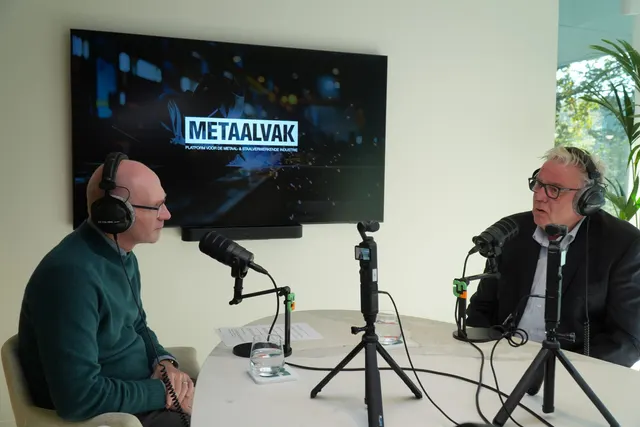
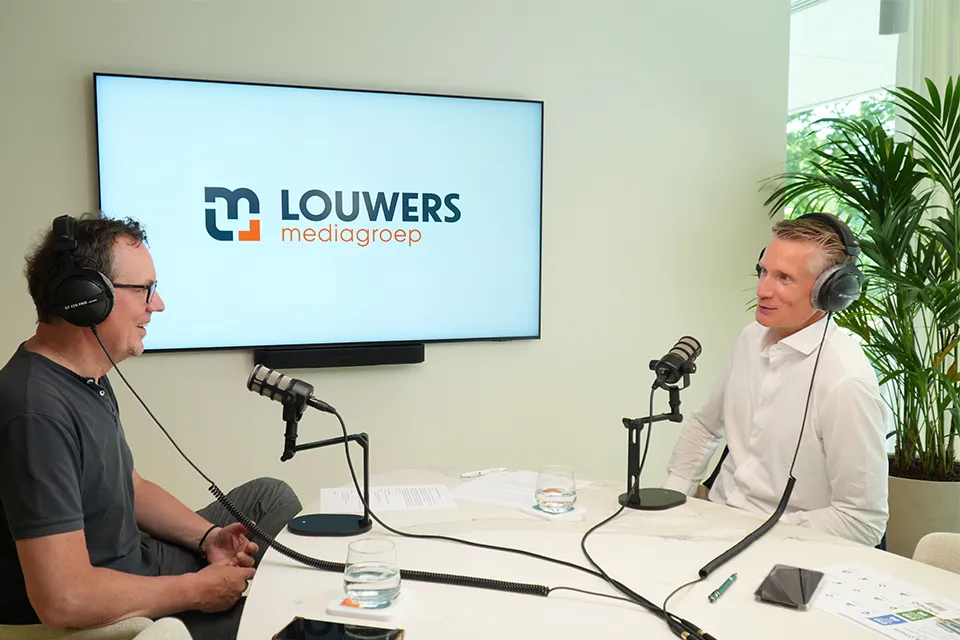
Kris Vandekerckhove Welcome to the Louwers Mediagroep podcast studios in Oostkamp. We have a particularly interesting guest in the studio today, because we’re going to talk about a subject that is still often underestimated, but can have a huge impact on companies and their employees: ergonomics in manufacturing environments. Many industrial processes still involve heavy manual work, including lifting, moving and turning. These tasks not only put a strain on employees, but also have a direct impact on productivity, safety and overall wellbeing. Not to mention happiness. That’s why we’re joined today by Thierry Reversé, managing director of Arcadel. Arcadel, based in Roeselare, specialises in ergonomic solutions and helps companies drastically reduce all kinds of physical strain. I’m told you use pneumatic manipulators, helping to make employees happier. Thierry, welcome.
Thierry Reversé Thank you for inviting me.
Kris Vandekerckhove Is what I’ve said so far more or less right?
Thierry Reversé Yes, you’ve summed it up nicely. Apart from the odd slip of the tongue, that is. But it’ll all be fine.
Kris Vandekerckhove Anyway, perhaps we can start with a brief explanation of what you do, for those who don’t know. You’ve actually been around since 1989. What exactly does Arcadel do?
What Arcadel does
Thierry Reversé Certainly, I’d be delighted. As you mentioned, we try to make employees happy. And that works both ways. When you think about employee happiness, on the one hand there’s the person directly affected, the employee who uses our equipment and is glad their back is being spared. On the other hand, there’s the employer, because ultimately it’s also important for them to have happy employees who perform well.
That’s quite a broad description, though.
Kris Vandekerckhove Almost esoteric, you might say.
Thierry Reversé Yes, perhaps philosophical. But Arcadel’s aim is to work with customers to find solutions tailored to their workplace ergonomics challenges. Let me give you an idea of the kind of work we do. Care, for example, is something we’re often asked about, but it’s not really within our scope, even though it is relevant in businesses. These can be manufacturing companies, logistics companies, or indeed any type of business where there’s a load that has to be moved, whether repetitively or not.
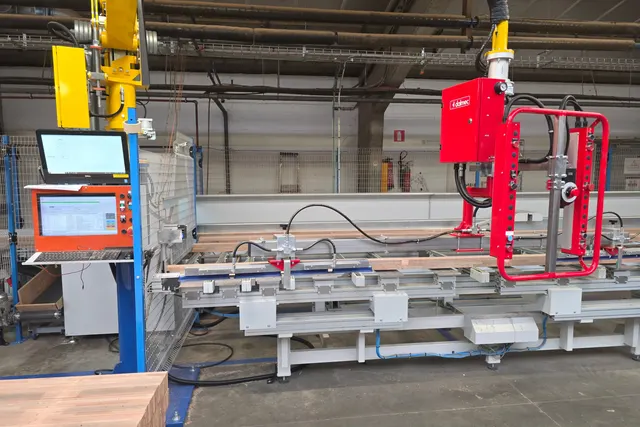
What do we do? We visit the customer, look together with them at what needs to be done, then develop or propose a good solution using our lifting aids. You’ve already mentioned pneumatic manipulators. We use air to make something float and render it weightless. We do this with our supplier Dalmec, which is based in Northern Italy. It’s a fine family business that has been active in the market for 65 years and is a pioneer in this field. It started out on a small scale in Italy, and gradually they realised there was real potential in it.
When you consider that companies are still sometimes struggling to introduce ergonomic solutions in the workplace today, and that Dalmec started doing this 60 or 65 years ago, you can see what a remarkable story it is.
Read the full transcriptCollapse transcript12 more chapters
How Thierry Reversé came to join Arcadel
Kris Vandekerckhove Absolutely. But how did you get into this field yourself, Thierry?
Thierry Reversé I’ve always enjoyed combining the technical and commercial sides of a job. My first job was in the lift industry.
Kris Vandekerckhove The lift industry, so something that went up and down?
Thierry Reversé Yes, up and down, though preferably we were going up. That job also brought the two sides together. I worked in sales after installation, so I didn’t deal with new installations, but with everything that came afterwards: maintenance, repairs and refurbishment. The motto was: look, a customer has a lift that isn’t working quite as it should. We can find a solution. And when we found one, implemented it successfully and the customer was happy, we were happy too. That’s how word gets around: “That company does good work, and that person does good work. You can go to them.”
I went through the whole process, which is a good thing to do because you get to see all aspects of the business. But then I moved a little away from what mattered most to me. For me, that was going to see a customer. I had a small team, and we all pulled together: a technical person and me in sales. Together, we had a team of around 20 technicians carrying out all the work for us. I really enjoyed it, but then they said, “Thierry, there’s real potential here. We’re going to promote you.” I was very happy to do that, but then you can end up going too far, working more on strategy and structures. You start travelling abroad. I covered the northern countries, including Sweden and Finland, and the Scandinavian countries.
Until I realised I was getting too far away from the customer who was looking for a solution and wanted to be happy with what we implemented. Then I took a different direction and joined a family business in West Flanders. A very fine, professional company too. But it was a completely different sector. The product itself was made using technical processes, and I spent a lot of time on the shop floor seeing how it was made. But it wasn’t quite the right fit for me. I didn’t feel a strong connection with that market.
Then I started looking around. I thought: “I can either carry on along the path I’m on now, and they’ll keep putting me in positions where they think I’m good, but where I might not get the satisfaction of meeting customers every day and finding solutions for them.” So I started looking for a change, as they say, taking the leap. Maybe I shouldn’t say it, but I took a leap without a safety net. That’s what I did. Then I came across Arcadel and its previous owner, and everything happened very quickly. I think we had concluded and finalised everything in less than three months.
When I left, I called my wife and said, “This is it, this is what I want.” It’s a technical product, it’s in the ergonomics field, which is a growing market. We’re all getting older, people are living longer. If you look at the population demographics, the working population will shrink even further over the next 20 or 30 years. The population is ageing. People have to work for longer. Let’s make that enjoyable and ensure that people on the shop floor can keep going for longer. So I took the leap and acquired Arcadel in January 2015. We’ve been at it for more than ten years now. It’s still fascinating.
Investing in ergonomics
Kris Vandekerckhove It’s certainly been a fascinating journey. We’ve touched on this a few times already, of course. Is ergonomics still too often something companies only invest in when things go wrong, rather than taking a proactive approach?
Thierry Reversé Very often, yes. Unfortunately, we sometimes find that we’ve already visited a site and worked with the customer on a proposal, but it gets put to one side. Then two or three years later it comes up again because, unfortunately, someone has been signed off sick, or because an external prevention service has flagged it as a red card, or because it has been raised at monthly meetings with the social partners: “Yes, something needs to be done about this.”
And unfortunately, that’s the case. I’m also in regular contact with my colleagues, and if you look at the Netherlands, we Belgians are 15 or 20 years behind in this area. In the Netherlands, when a new production line is installed, the first thing they think about is: “Right, how can we make this ergonomic?” That component is heavy, so we’ll look at adding a lifting aid to make things easier for the people working with it.
Over the past ten years, Belgium has also started to make that shift, with greater involvement from people on the shop floor. That’s what concerns me most: in the past, things were often just imposed from the top down. “Right, it’s there, use it. Stop complaining, you’ve got something to work with.” But that doesn’t work. We’re seeing greater and greater involvement from employees.
Arcadel’s approach
Kris Vandekerckhove So what makes your approach different from the other solutions that are probably available on the market?
Thierry Reversé Our approach is very personal. What do I mean by that? We’re a small company. We can handle large projects, so don’t get me wrong. But our team in Belgium is small, and we’re backed up by our colleagues in Italy, where there are 250 to 300 people. We also have Dalmec’s international network, which gives us full support if we ever lack the resources to get something done.
But where do we make a difference? I wouldn’t call myself a pure salesperson. Yes, I like selling solutions to my customers. But I don’t like talking about sales. I’d rather focus on finding a good solution. Sometimes I lose out because we’re too expensive or because the customer says, “Yes, I’m not going to do it after all.” But we often see them come back. Sometimes I don’t even make an offer, and they go elsewhere and choose a solution that I might have warned them against: “Be careful, don’t do that, because for this reason or that reason it won’t be used properly.”
And I think it’s a real shame when you invest €20,000 or €30,000, or whatever the amount may be, perhaps €10,000. Every euro you spend unnecessarily on equipment that doesn’t get used is one too many. You can make good use of it if you think it through properly.
So it’s all about the personal approach. Anyone who comes to us will stay in contact with me from the first conversation right through to implementation. The advantage is that I handle both the commercial and technical aspects. I’m in touch with my supplier, so my customer doesn’t have to call Italy to explain things. I provide that support. And before it goes into production and is put into use, we make sure it works perfectly.
How pneumatic manipulators work
Kris Vandekerckhove And just to get a little more technical for a moment. You said you use air to lift really heavy objects. How exactly does that work?
Thierry Reversé You always need a compressor. It’s not an electric system. So when you connect the unit to the compressed-air line, the pressure is 7 bar on average, though it varies a little. Sometimes it’s a bit higher. With heavier loads, in particular, it can rise to 8 or 9 bar. But we can fit a booster in between. That’s a bit technical, but we can solve all of that. We’re also seeing a trend towards greater awareness that compressed air has a cost. If an entire company needs to raise its pressure by one bar, that costs a fair amount. So we have alternative solutions that allow customers to keep their network at a certain pressure while still giving our equipment the pressure it needs to operate correctly.
So you don’t need electricity. That also makes it a very reliable technology. Damp or dusty environments, or even working outdoors, have no effect on it. That was what appealed to me about it in the first place: it’s a reliable technology and it’s easy to manage. If you look at the diagram, you can disconnect a line; the worst that can happen is that air escapes. Reconnect it and carry on looking for the problem.
We only use electricity when we’re working with a vane pump, essentially a turbine, to generate a vacuum for bagged goods or materials that are very permeable to air. But it’s used purely as a, to put it slightly disparagingly, vacuum cleaner. All the safety and balancing functions, and so on, are always powered by compressed air. We prefer to keep the two separate.
Equipment maintenance
Kris Vandekerckhove And what about maintenance? There don’t seem to be many moving parts, do there?
Thierry Reversé Well, there are mechanical parts that move, of course. Everything is connected with bolted joints. We inspect the equipment once a year, because there are interfaces as well. There are push-buttons and valves behind them. There are also mechanical points that need to be checked.
The entire unit is also designed to work without oil. So we tell customers not to lubricate it with oil and to use as little grease as possible. The more grease and oil you apply, the worse it works, because dust gets in and it starts to stick.
So once it’s installed, it’s a fairly low-maintenance unit. But we still carry out an annual inspection for safety and to make sure everything is working properly. There’s also an external factor: the compressed air. If it isn’t dry and oil-free, it can affect how the equipment works. We do see that sometimes. You disconnect the little pressure vessels, for example, and suddenly a fountain of water comes out and you get a shower. Or you find that certain safety features are no longer working properly because the compressed air is actually contaminated. That’s why we carry out an annual inspection.
Projects Arcadel is proud of
Kris Vandekerckhove Great. I assume you have a few projects you’re particularly proud of?
Thierry Reversé Yes, there are lots of projects we’re really proud of.
Kris Vandekerckhove All of them, of course.
Thierry Reversé Yes, yes, yes. But two stand out. If I may briefly talk you through both of them.
Kris Vandekerckhove Absolutely.
Thierry Reversé The first is DAF Trucks in Westerlo. In 2019, they were given the opportunity to install a completely new trim line in Belgium.
Kris Vandekerckhove For those who don’t know, what is trimming?
Thierry Reversé Trimming is the cab, the space where the lorry driver sits. The seats, dashboard, bed and overhead lockers, as they’re called. Basically, everything inside the cab is known as trim. All those components were the subject of a production line.
So a bare cab arrives, and two doors have to be removed. Then everything has to be fitted. The seats go in, the dashboard goes in, the windscreen is fitted, and a bonnet is fitted at the front. It’s a very varied process.
It was a very large project. They had an old trim factory, but with the launch of the new model they were also going to install a completely new line. The axles are also made here in Westerlo. The fully finished cab, without the chassis, is then sent to the Netherlands, to Eindhoven. That’s where our colleagues in the Netherlands put the tyres on the chassis. The chassis and cab are then joined together.
They also made some changes there, but they were less drastic because the cab design was completely different from before. It also turned out to be a very nice lorry, if I may say so.
It was a very challenging project for us, particularly because nothing was allowed to stand on the floor. Everything had to be suspended from the ceiling, from the overhead structure. What’s more, DAF had carried out a preliminary study with a partner they had worked with before, whose approach was completely different from ours. So we had to adapt to the layout they had planned, while ensuring the quality and guarantees needed to install everything properly without damaging the overall system.
And we had to take into account the takt time, because this is a moving line. People in the automotive industry know that. The line keeps moving; it doesn’t stop. And if it does stop, everything starts backing up. If a manipulator is the cause, you soon find out. You don’t want to be responsible for a trim line being stopped for ten minutes or half an hour. These were challenges I’d never faced before myself. But just because you haven’t done something before doesn’t mean you can’t do it. That was the attitude we went in with. And we delivered a great result.
The scale of the DAF project
Kris Vandekerckhove That sounds like a very large project. We’re talking about a line with your manipulators positioned at various points along it. It must have been a major project.
Thierry Reversé It was a very large project, yes. I think there were 16 or 18 units that all had to be installed within a very short period, just one month. And of course, automotive is a very demanding sector, with testing taking place. Teams were set up to assess specific components. For example, the cockpit is one component, and the team had to fit it and give feedback. They’d say, “This needs to be different, that needs adjusting.” So there was also quite a lot of fine-tuning afterwards.
But we finished it very well, and the customer was very happy and still is. We’ve already implemented some new features there since then. And it’s a lovely lorry.
Kris Vandekerckhove It’s a very nice lorry. We’ll go and have a look at it shortly. You mentioned another case as well.
Thierry Reversé Yes, that’s right.
A case study at Brustor
Kris Vandekerckhove What about somewhere a little closer to home?
Thierry Reversé Then there’s Brustor. They’re a great customer, and a new one too. They weren’t previously in our customer portfolio. What does Brustor do? They make all kinds of sun protection products, from patio covers and blinds to awnings that you can wind out or extend and retract electrically. That’s the kind of thing Brustor does.
But you know how large these items are if you have a patio that’s seven metres wide or long and three or four metres deep. They’re all laid out, the accessories are added, then they’re packed into cardboard and boxes and strapped. It was a manual process.
Once they’re strapped, they form a neat line. But at the end you’re left with a box weighing up to 150 kg in the worst case. You have to lift it carefully off the conveyor and place it in a cage for onward distribution to the installer, without causing any damage, of course.
That was a pain point. We saw that they needed two people to do it, and that the boxes were often picked up and then dropped down rather heavily, with all the consequences that entails.
We started by inviting them to come to us, and I explained the solution. It was quite a process. We set up a complete showroom, the first thing I did when I joined Arcadel. It’s a showroom with all kinds of technologies, including clamping, vacuum and hook systems. There are also different weights and control systems, so customers can try them out.
So Brustor came to see me, and Davy did too. They were able to test the equipment and see how it worked and how it behaved. When you see people standing there with their mouths open, saying, “It works like that? And it moves so smoothly?” it’s always a very satisfying feeling.
Brustor eventually bought one unit, after we also visited a customer reference site. That was actually the bigger challenge: a suspended, mobile system in which the unit hangs from a carriage and moves forwards and backwards along a rail. This gave them 33 metres of coverage and greater flexibility.
They have one or two dispatch points. They wanted to pick up the boxes and, for example, use a crate ten metres further along, then another one five metres further on, and so on. We implemented that too. The feedback was very positive. The operators who used to work there often had to take time off sick. These are the sort of workstations no one wants to be at. But now everyone is happy.
Kris Vandekerckhove No one wants to be lifting a 150-kilo box all day.
Thierry Reversé No, no, no.
Kris Vandekerckhove So that’s another case you’re particularly proud of?
Thierry Reversé Yes, we’re proud to be able to work with them here locally.
Ergonomics and robotics
Kris Vandekerckhove Anyway, while you were talking, and particularly about both cases, it got me thinking. We’re seeing, and there’s no hiding it any more, especially in industry, increasing automation and robotics. What role do you play in that?
Thierry Reversé We are often complementary, not always a direct competitor, if I may put it that way. When you look at automation, you quickly come across repetitive work. Manufacturing companies that operate continuously, 24/24, 7/7, or at least have people working day shifts but with a high production rate. We can handle that pace too, but what is the difference? First, in terms of investment, there is a considerable difference. Automation is becoming less expensive, but we still offer flexibility. So you do not replace the person.
Sometimes, by optimising things, which is what we are looking to do, you can ensure that other people on the shop floor are no longer interrupted with: “Come on, can you give us a hand moving this?” What we offer eliminates that. But you still have one person who can now move heavier items efficiently and ergonomically, in a comfortable way.
We also often work in combination with a robot, either handling its output or feeding it. We take care of the infeed or outfeed, because it is not cost-effective to install a second robot cell for that, which would also require all kinds of safety measures that prevent people from entering it.
Plus, you should not forget that our equipment has been developed to offer interchangeable tooling, very quickly, and it works very smoothly without costing you much time. You never need tools to make the change. That is what makes the combination of the two work. So I do not see it as a threat to us.
Kris Vandekerckhove More as a complement, then?
Thierry Reversé Yes, a complement. There are also many smaller companies that say: automation is not for us. Perhaps they only run for one week, for example, or their production rate is lower. In that case, we can certainly help take the strain off their people. But we cannot justify the investment in a robot. When you realise that the price tag can be ten times as high, the decision is quickly made.
When companies should contact Arcadel
Kris Vandekerckhove When is the right time for a company to talk to Arcadel?
Thierry Reversé As early as possible.
Kris Vandekerckhove Of course.
Thierry Reversé Yes, that is what we recommend too. As soon as you have a question about how something should be lifted, or you are going to renew a process. People say: “Look, we have a new product coming in.” Get us involved. We will come by free of charge and with no obligation. If we can offer something and help, we will. If another solution is more suitable, we will say so.
I am very clear about that. When people visit my showroom in Roeselare, I explain the options to them. But if I have doubts about whether a particular movement is being performed manually before they lift something, I will say so. And sometimes I simply do not offer anything, because I do not want the customer to invest in something that then sits there unused. It really does need to be embraced by the people on the shop floor and supported by management, and it needs to add value. So when should they come to us? The earlier we are involved in the process, the better we can respond to that need. And if the environment still needs adapting, we can do that too.
That said, we try as much as possible to work within the existing structures, environment, products and constraints. In the end, everything is made to measure.
Job satisfaction and returns
Kris Vandekerckhove To spread job satisfaction and happiness as effectively as possible.
Thierry Reversé Yes, that is right. Job satisfaction for both the employee and the employer. We will come back to that. Because the employer is actually the person who needs to be convinced. The business owner says: “Do you really need to spend €30,000 on that?” I am talking about €30,000 now, but equipment can cost less too. “And what will I get out of it?”
But then consider this: if that employee is happy afterwards, no longer takes time off sick, no longer has back pain and enjoys coming to work…
Kris Vandekerckhove You do not have to replace them.
Thierry Reversé You do not have to replace them, and that is a very important point. Many people underestimate the indirect cost of replacing staff. You do not pay a temp brought in to cover for someone at the same rate as a regular employee, because it is twice, three times or four times as much. Those outsourcing companies have to make a living too. Plus, you have the HR process behind it, with time needed for selection and recruitment.
And once that person is on the shop floor, they will not work as efficiently as the employee who does the job day in, day out. They may work at 60, 70 or 80 per cent of their capacity. And there is still the risk of damage. Then your company suffers reputational damage in the eyes of your customer. There are many factors that make the investment worthwhile.
And what we see, as I briefly mentioned earlier, is that when the employee is ultimately satisfied, the employer becomes satisfied too. And that is what we need.
Closing the conversation
Kris Vandekerckhove Exactly. Well, Thierry, thank you for this fascinating conversation. What will we take away from today? What have we learnt? That ergonomics is about much more than comfort alone. It has a direct impact on safety, productivity and even the future of manufacturing companies. So if you work in a manufacturing environment and recognise the challenges we have discussed today, it is certainly worth looking into the solutions available from Arcadel and Thierry.
Thank you for listening to this podcast episode with Thierry Reversé of Arcadel. Did you find this conversation interesting? Feel free to share it with colleagues or within your network. Thank you, Thierry, and see you next time.
Thierry Reversé Thank you, my pleasure.
Kris Vandekerckhove Thanks, then.
Companies in this story
Keep following this
Get an email when a new story is published. No account needed.
- ThemeSkilled professionals for a changing sector
- SubjectAutomation
- CompanyArcadel