











EuroBLECH brings the latest opportunities in sheet metal processing together
Text Valérie CouplezImage Bystronic, Euromac, HACO, JÖRG Machines, Kjellberg, LVD, Mazak, Prima Power, Remmert, TRUMPF, VG Machines en Q-Fin
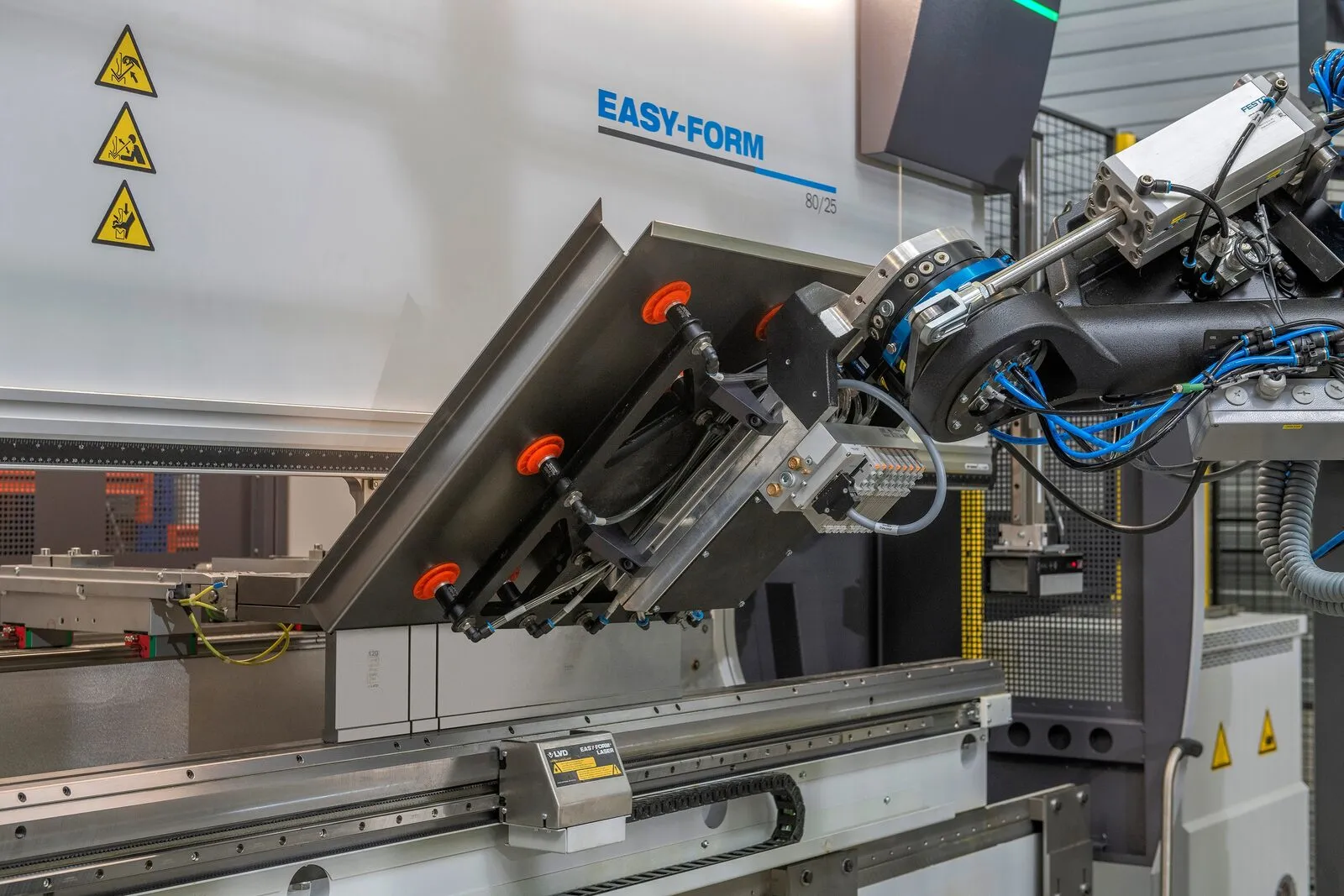
If there is one conclusion to draw from EuroBLECH 2026, it is this: in the world of sheet metal processing, the robot is king. This reporter spotted more of them during the four-day paradise for sheet metal processing than at the traditional automation trade fair held at Hannover Messe in April. In every colour, from a white one at Kjellberg to a black one at Mazak, and every shade in between. Their dominance says something about how difficult it is to attract technical talent today, and how far manufacturers of sheet metal processing technology have come in embedding that technical expertise in their machines.
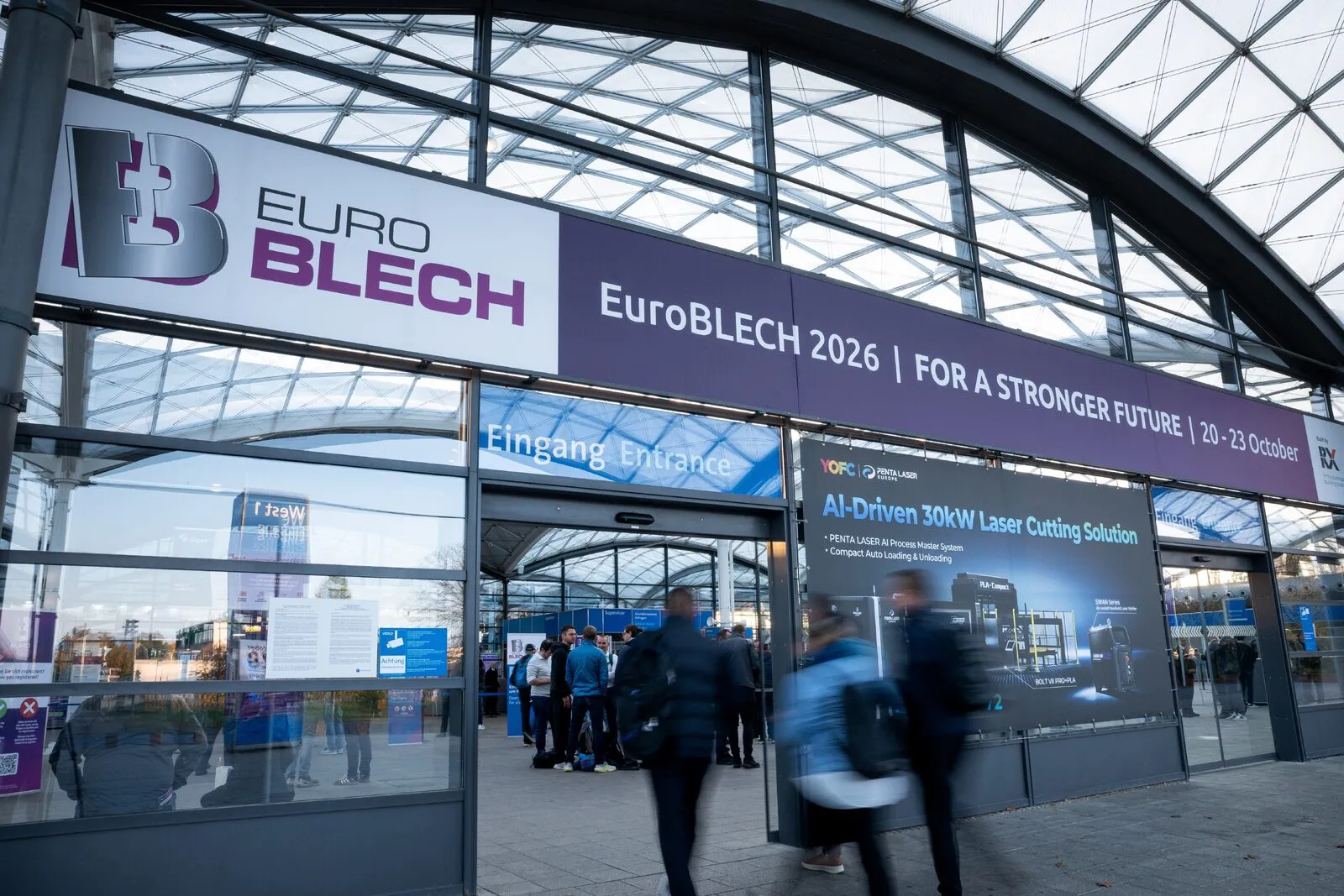
But first, let’s look at the figures before delving into the content. The 28th edition of EuroBLECH attracted 32,336 visitors. As always, it was a diverse international crowd, with representatives from no fewer than 110 countries. “Despite challenging market conditions, EuroBLECH 2026 has shown that technological development and the drive to improve production remain strong,” said Evelyn Warwick, EuroBLECH event director for RX. “Targeted improvements in tooling, automation or process control can make a significant difference to productivity and efficiency. Bringing these different approaches together, with working machines and direct access to technical experts, is one of EuroBLECH’s strengths.”
Smart automation
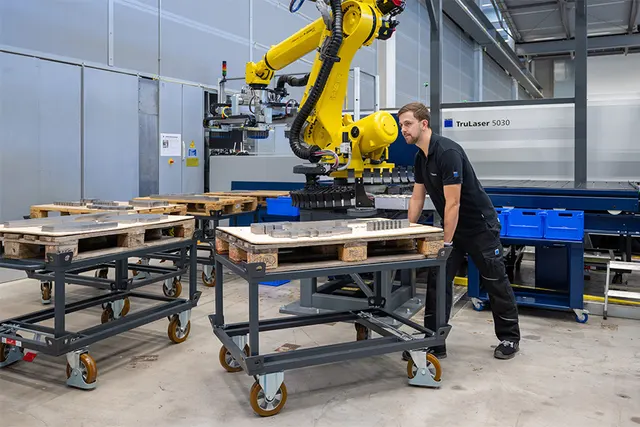
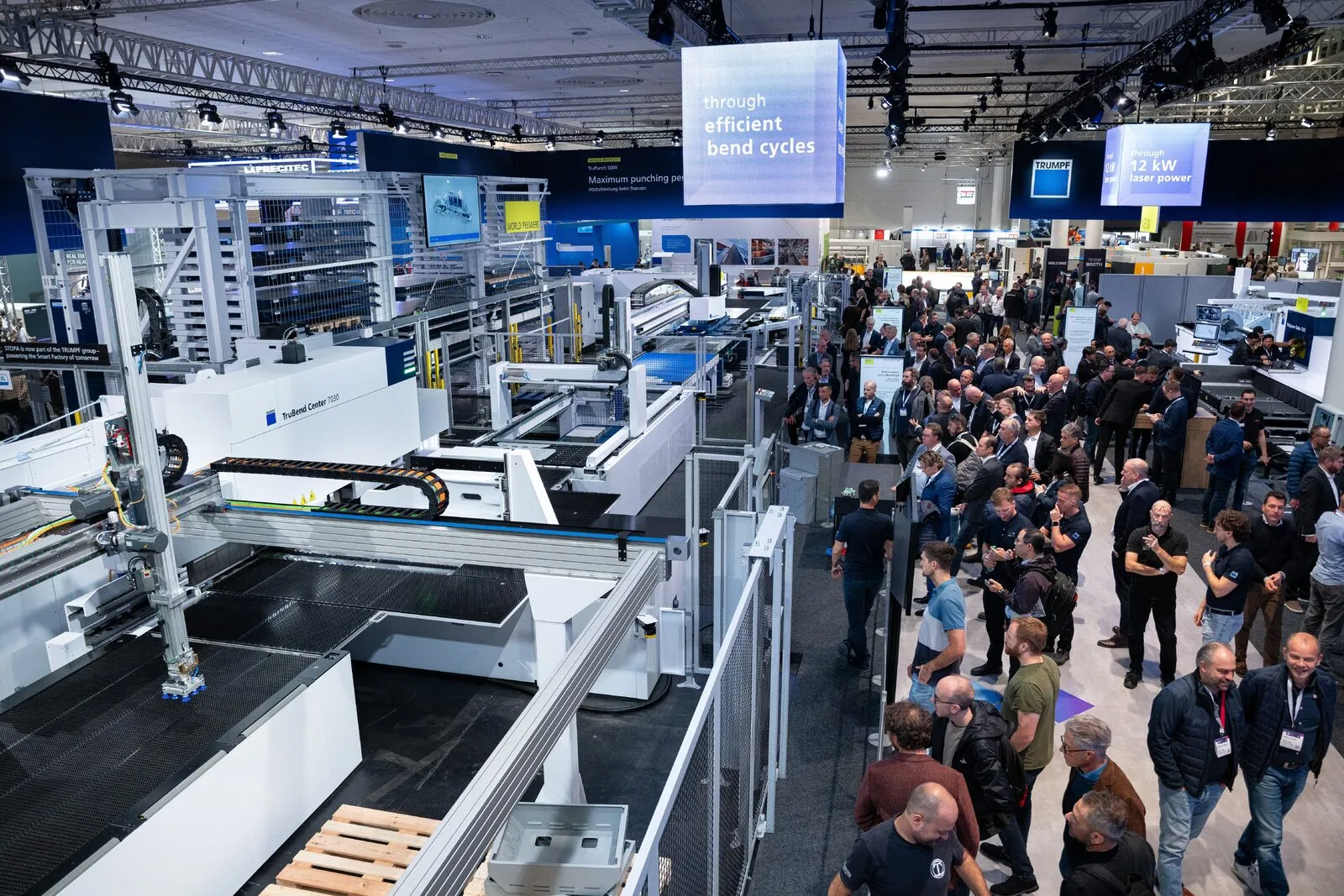
Automation took centre stage, then. This edition’s top honour went to TRUMPF, which won the EuroBLECH Award for Automation & Smart Factory. The award confirms what we already knew: laser cutting speed is not the factor holding back growth. The real bottlenecks lie in handling and programming. TRUMPF showed what a holistic approach can mean for modern sheet metal processing: combining high-performance sorting cells and laser welding systems with AI-driven motion planning makes manual programming a thing of the past. The systems recognise parts independently and integrate autonomously into existing workflows. What once seemed like a distant prospect is already a reality for those with the budget.
Bending robots in the spotlight
Where has that bottleneck shifted to? Bending. At least, when it still has to be done manually and complex parts require specialist expertise. Bending robots are nothing new, but they were only cost-effective when large batches were involved. That is no longer the landscape. Today, the rules are set by high-mix, low-volume production. The reason they nevertheless had a prominent place all over the show is that they now have a second trick up their sleeve: flexibility, both in programming and in the parts they can handle.
A good example was on the Bystronic stand, where the Xpert Pro Midsize bending cell made its debut. With a capacity of 150 tonnes, it fits perfectly between the two existing cells. Bystronic was also runner-up for the coveted award mentioned above.
Robot meets vision
LVD, Belgium’s pride in sheet metal processing, has even built a separate division around this area following two acquisitions, including that of the Solutions Unit of KUKA Automation and Robotics NV in Houthalen-Helchteren. This acquired expertise is set to significantly expand LVD’s reach in robotic automation under the name LRS (LVD Robotic Solutions).
The focus is on short lead times and quickly converting a 3D model into a bent part. The impressive machine on show at EuroBLECH certainly boded well. Its first example was on the other side of the wall, where the RBS 40 Vision was being demonstrated. This robotic bending solution is equipped with an AI-driven vision system that identifies parts, locates them and checks their orientation.
Bending with a lower grid connection
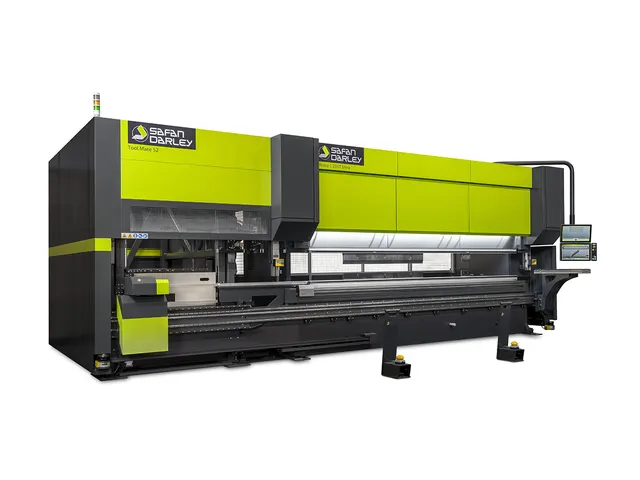
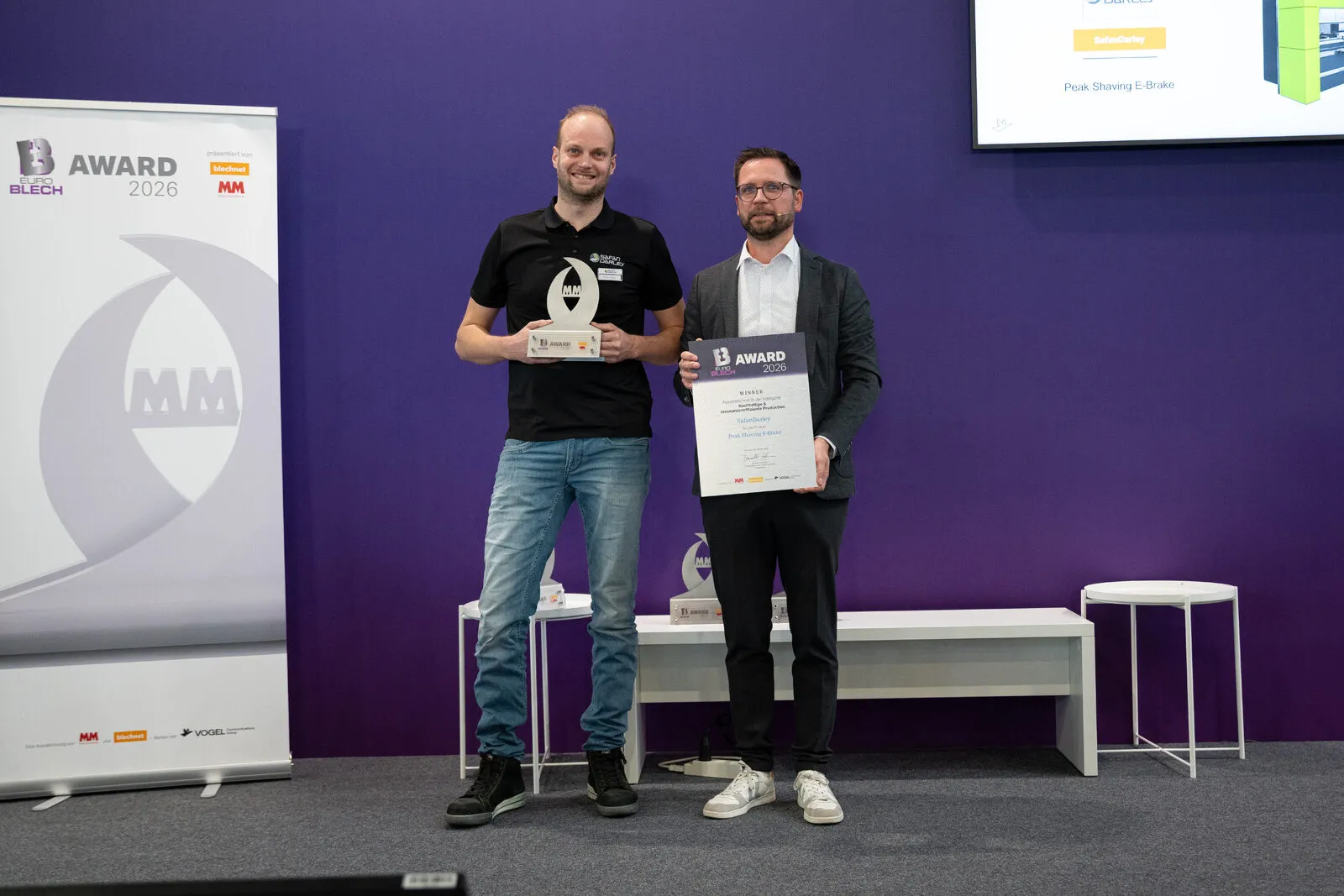
We found a striking innovation in bending at Safan Darley. It had nothing to do with speed or efficiency. There was not even a robot involved: the focus was entirely on grid congestion. Overloading of the electricity grid and expensive peak-demand charges are an increasing burden for manufacturing companies.
SafanDarley is tackling this problem with the Peak Shaving E-Brake. This electric press brake combines highly efficient drive technology with local energy storage and intelligent energy management. Peak loads during the bending cycle are absorbed by the integrated buffer, significantly reducing the required connection capacity, saving infrastructure costs and paving the way for grid-stable, green production.
First press brake
And we are not done with bending yet. The Mazak stand also had a notable first to report: its very first press brake. Mazak is increasingly establishing itself as an innovator in (tube) laser cutting, but the Japanese manufacturer lacked a complete ecosystem to make its mark even more firmly on sheet metal processing companies.
Optonics powered by Mazak showed its first press brake at EuroBLECH. At the heart of the XB series is a patented hybrid drive system that uses independent electric servo motors and pumps on the Y1 and Y2 axes. Power is supplied only when needed, enabling rapid ram acceleration and bending speeds of up to 15 millimetres per second, while reducing standby losses, operating noise and the need for ongoing maintenance. Everything you would expect from a modern press brake, then. Pressing capacities range from 130 to 250 tonnes, with maximum bending lengths from 3200 millimetres to 4100 millimetres.
Entry-level model, ready for automation
From bending to panel bending. At EuroBLECH, it is an easy step sideways. At Prima Power, visitors could discover the BCe Core, a new servo-electric panel bender. It is an entry-level model, while retaining the technology, integration options and technical know-how in panel bending that the manufacturer has built up over four decades.
At EuroBLECH 2026, Prima Power demonstrated this concept with a compact ‘cut-to-bend’ production solution integrating a Platino Linear laser cutting machine, the new Handling and Sorting Robot (HSR), autonomous mobile robots (AMRs) and a BCe Core 2020 with a robotic bending cell. The concept illustrates a scalable path from standalone operation to highly integrated production. Technology that can grow with your production, in other words.
Optimising handling
They were far from the only AMRs driving around EuroBLECH. Remmert had plenty, for example. But the focus was not on the vehicles themselves, so much as on the integrated systems they are part of, which automate the entire handling process. The conductor of this orchestra, the updated ONE WMS warehouse software system due to launch next year, was already given its debut here.
Q-Fin, meanwhile, has automated the handling process for deburring and finishing with its three Qubes. At the show, we saw the 50D version. Thanks to Eye-Q vision, sheet metal parts weighing up to 50 kilos are automatically recognised, accurately positioned and efficiently processed in combination with your Q-Fin finishing machine. Ideal for production environments looking to increase output, maintain consistent quality and reduce manual work.
Belgian pride
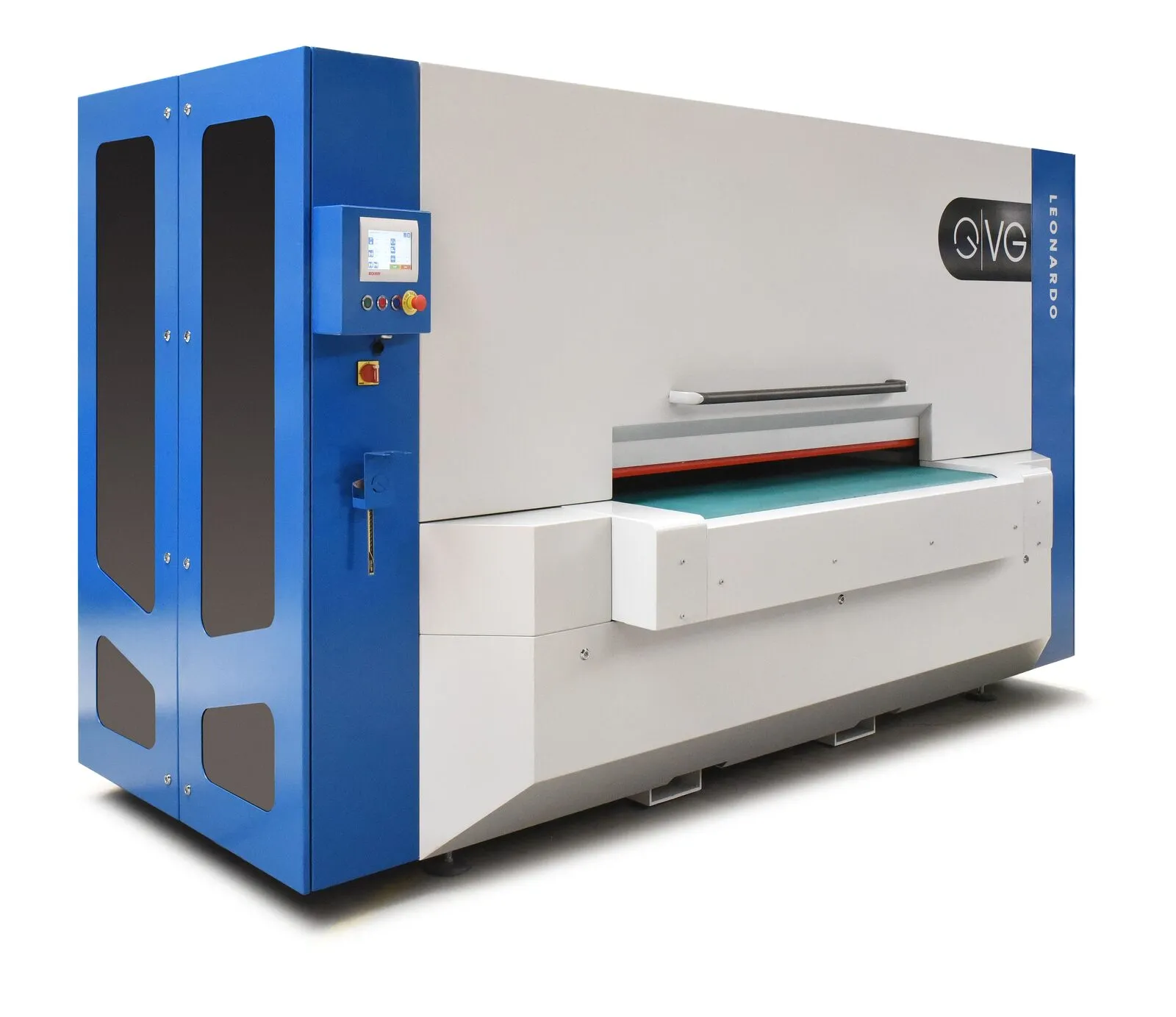
Belgium also made its presence felt at EuroBLECH. VG Machines, a deburring specialist, finished in the runner-up spot in the finishing category at the awards ceremony with its Leonardo. Yet this master of deburring and edge rounding delivered more innovation than the actual winner. No award, but plenty of public interest in its story of the lowest total cost of ownership, thanks to the choice of a transverse abrasive belt.
A hall away, HACO was also there. The biggest news to emerge from its stand was not a new machine, but a strategic industrial partnership with Jiangsu Yawei Machine Tool. The companies will move forward together as a new industrial platform, combining HACO’s European engineering expertise, established brands and local market presence with Yawei’s global industrial scale, manufacturing capacity and technology.
Lasers in the spotlight
But, Your Majesty, we are nearly at the end of this article. Are there really no lasers left? In previous editions, the fibre laser was surely the main talking point at the show. This time, they may have played a less prominent role on stands, but they were certainly still much in evidence. Penta Laser, for example, brought along its Bolt VII Pro for the occasion. While 30 kW is already beyond the limit for some manufacturers, for Penta it is a mid-range machine. In terms of power, at least, not performance, because this version can do almost everything automatically, from changing the nozzle to centring the cutting head.
It is a machine that also enables subcontractors to remain competitive. You could see that in the cutting quality of the parts displayed behind the machine.
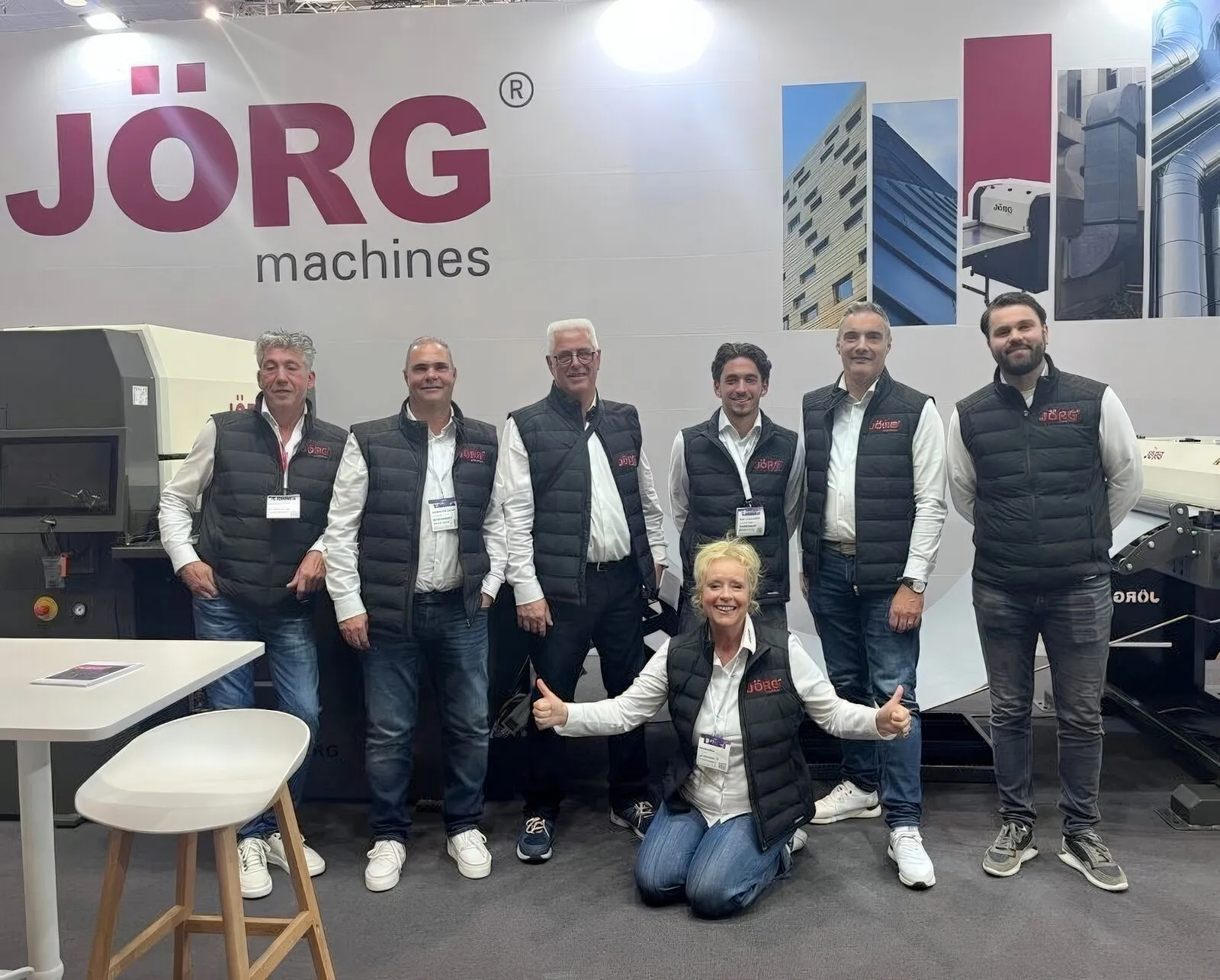
At JÖRG Machines, we found a very different laser application: laser cutting of coils, using a concept that is unique in the market. That was reason enough to sit down for a chat. When we asked how this Dutch machine builder sets itself apart, we heard three words: reliable, precise and fast. But what they are really proud of is the after-sales support they provide to customers. That, too, is what sheet metal processors can expect from their suppliers in 2026.
Shearing and plasma continue to innovate
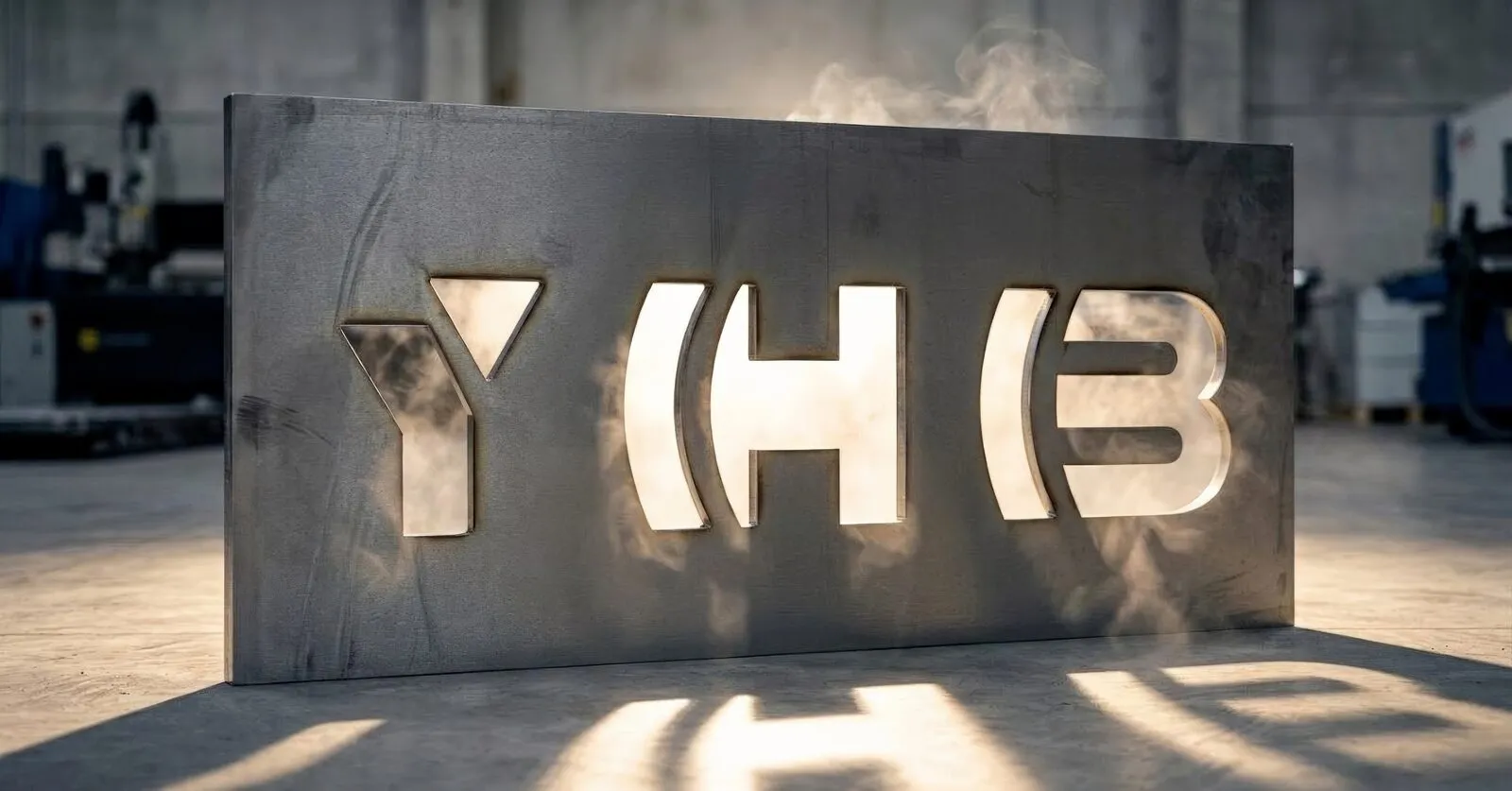
But the most efficient cut is not necessarily made by a laser for every application. For long, straight cuts, a shear will still give you the best result, both in terms of speed and cost per cut. That is why Euromac brought its XT-SHEAR combi along. Combining an angle shear and a punching machine, it makes for a highly efficient processing centre that cuts and machines parts in a single operation. It has been on the market for a while, but this solution more than deserved the enthusiastic applause of the EuroBLECH crowd.
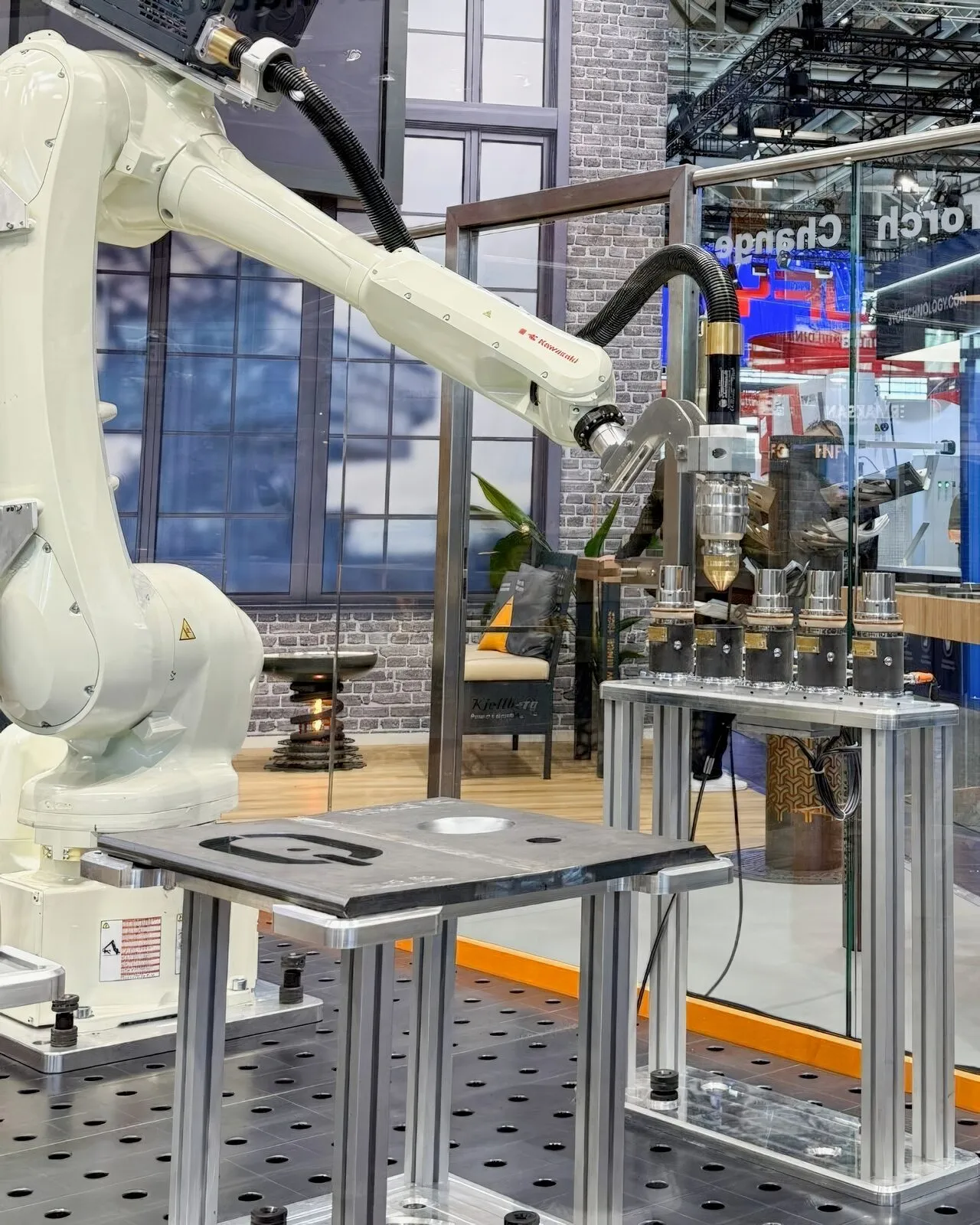
For very thick material, a plasma cutting machine remains an excellent solution. Kjellberg showed a combination with a robot, because unlike the light from a fibre laser, plasma cutting does not need to be housed in a fully enclosed area. Plasma cutting still has plenty to offer. At the next edition of EuroBLECH, from 24 to 27 October 2028, we will no doubt see more technological developments.
This edition, TRUMPF won the EuroBLECH Award for Automation & Smart Factory.
Question about this story? Ask your question
Companies in this story
Keep following this
Get an email when a new story is published. No account needed.
- ThemeFaster, more accurate sheet metal processing
- SubjectEuroBLECH
- CompanyLVD
- CompanySafanDarley
- CompanyPrima Power
- CompanyRemmert GmbH
- CompanyJÖRG Machines BV