











New software makes automation more accessible
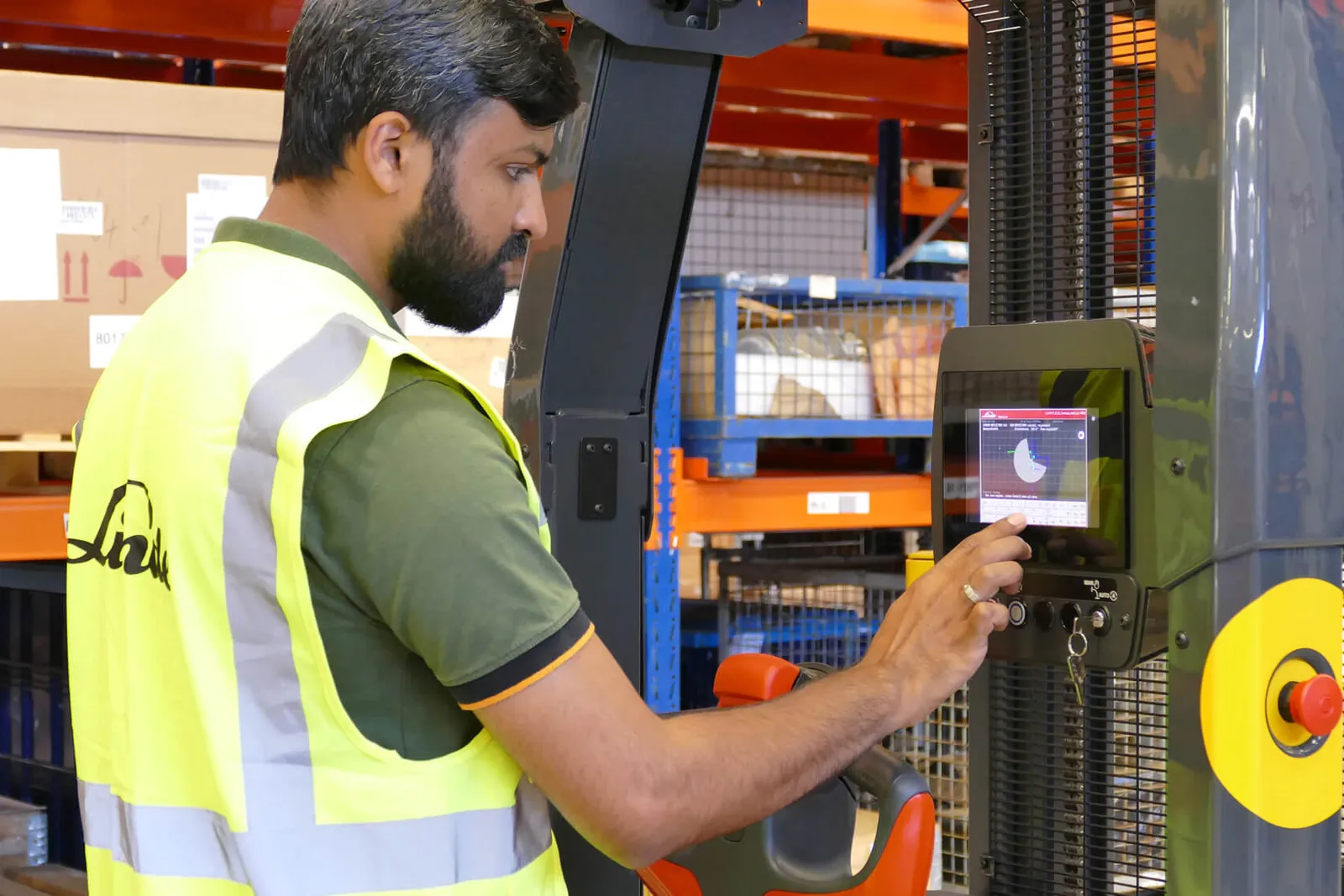
Linde MH launches new software solution for intralogistics automation
With “MATIC:move” software from Linde Material Handling, companies can now automate their intralogistics even faster and more cost-effectively. The software will be implemented, for example, in the fully automated Linde L-MATIC core truck, which is due to go on sale in February. This pallet stacker also has an integrated lithium-ion battery and, thanks to its compact design, is ideally suited to confined spaces in warehouses and production areas.
Simple implementation and planning
Pascal Kuster, Sales Trainer Automated Guided Vehicles at Linde MH, introduces the new software: ‘On the one hand, we are seeing enormous interest in automation solutions. Many companies are facing growing challenges, including short delivery times in e-commerce, increasing cost pressures due to high energy prices, greater focus on sustainability and safety and, last but not least, a shortage of skilled workers. At the same time, almost everywhere there are material flow processes that are ideally suited to automation. On the other hand, we are also seeing reluctance, driven by the high costs and the effort involved. Linde MH is now resolving this dilemma with “MATIC:move” software. It enables small and medium-sized companies to improve their efficiency with automated industrial trucks.’
The main advantage of “MATIC:move” software is the straightforward planning and faster, shorter implementation of automated material flow processes. ‘In practical terms, this means that simple drop shipments between two points can be set up in a day,’ says Pascal Kuster. Maintenance and servicing work can be carried out by trained service technicians, without the need for specialist robotics engineers. To provide the software with the necessary data, the automated truck follows the required route, creating a digital map of the warehouse environment. The vehicle pick-up and drop-off points and routes can then be planned on a computer screen using the “drag & drop” principle.
The software is primarily designed for smaller fleets of up to five industrial trucks of the same vehicle type, handling standardised load carriers such as Euro pallets and mesh box pallets. The main focus is on horizontal transport in warehouses, as well as in production, goods-receiving and dispatch areas. Mixed traffic involving manually operated industrial trucks and pedestrians can also be mapped. This significantly reduces investment costs, resulting in an average payback period of around two years, according to Jan-Niklas Freund, Manager Automation Sales Steering at Linde MH.
New fully automatic high-lift pallet stacker
“MATIC:move” software is already in use with the autonomous Linde L MATIC HD k. This pallet stacker has a load capacity of 1.6 tonnes and a lift height of 3.8 metres, and can operate in both wide and narrow aisles. The new Linde L-MATIC core is the next truck to come to market with this new software solution. This compact “game changer”, with a load capacity of 1.2 tonnes and a lift height of 1.78 metres, has an integrated lithium-ion battery but no tiller, and can operate in aisles less than 2.5 metres wide.
To ensure safe operation, the Linde L-MATIC core comes as standard with a 360° safety zone. It is also equipped with emergency stop switches on several sides, allowing the pallet stacker to be stopped at the press of a button. In addition, the stacker can be fitted with extra safety options such as Linde BlueSpot or Linde Red Warning Lines. The battery can be charged manually or automatically using inductive charging.
Step-by-step expansion
Customers can also build on “MATIC:move” software for more complex automation projects or when plans call for an expansion in the scope of automation. In these cases, the “MATIC:move+” package provides the solution, enabling fleets of up to 150 trucks to be automated. This extended software can be connected via interfaces to fleet management, warehouse control and ERP systems. The services available range from visualising the current status of the trucks to battery management and an overview of truck availability and utilisation.
‘Thanks to the software’s scalability, every customer gets the right solution, whether for existing applications or an entirely new plan,’ concludes Pascal Kuster. This also allows companies to start on a small scale and expand their automation step by step.
Question about this story? Ask your question
Keep following this
Get an email when a new story is published. No account needed.
- ThemeShop floor automation
- SubjectSoftware