











What AI can do for you
Text Valérie CouplezImage iStock
For the average metalworking company, the headlines about artificial intelligence transforming the industry seem a world away. Most metalworking businesses are still grappling with outdated databases, bespoke ERP systems, decades-old equipment and IT teams that are either non-existent or too small. In these environments, AI is often too disruptive, too risky or simply incompatible with the way work is actually done. But a clear shift is under way towards more realistic options for companies that cannot afford downtime but know they need to modernise to remain competitive.
The cloud promises scalability and accessibility, but for a hands-on sector such as metalworking, that promise comes with significant drawbacks. The reality on the shop floor often clashes with the assumptions built into many cloud AI solutions. First, there is the risk of disruption and downtime. A manufacturer’s revenue is directly linked to machine uptime and throughput. The idea of halting operations for months for a major system overhaul is unthinkable. In addition, reliance on a cloud provider brings external risks. An internet outage or a problem at a remote data centre can bring a connected factory to a standstill, with immediate and direct financial consequences.
Additional challenges
And that is before we even consider the dangers of hackers and data breaches, and the need to protect that data. In our sector, competitive advantage often lies in proprietary processes, bespoke designs and customer relationships built over many years. The thought of someone using your workshop’s data to train models that could eventually benefit a competitor is a worrying one.
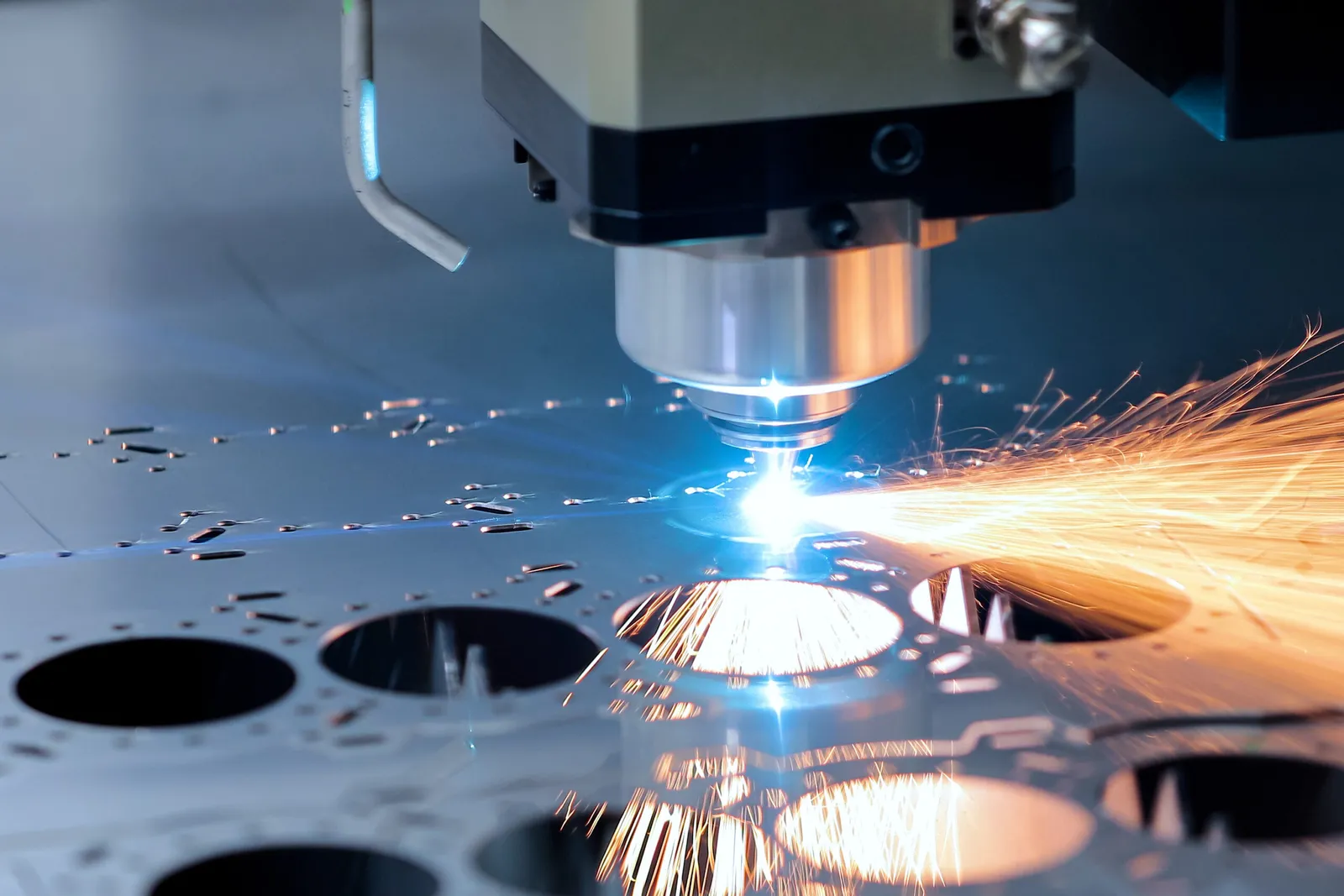
Finally, the legacy environment in a workshop presents a problem. A typical workshop is not a sterile, homogenous IT environment. It is a dynamic setting where a 25-year-old press brake works alongside a brand-new fibre laser. Many AI solutions are designed specifically for modern, standardised systems and struggle to integrate with this kind of diverse, often outdated infrastructure.
The skills shortage makes this gap even wider. At most small and medium-sized manufacturers, IT staff already have their hands full keeping existing systems running. They lack the specialist expertise and capacity to manage AI integrations or assess a dizzying array of suppliers.
AI that listens to welds
But there is no denying that AI offers clear benefits. In metalworking environments, it may be better to stay out of the cloud, eliminating some of the risks while still benefiting from some of the advantages.
On-premises AI is appealing not only because it protects your data, but also because it has another advantage. Real-time processes such as robot control, in-line quality inspection and automated machine adjustments require response times measured in milliseconds, which can be compromised by internet latency. On-premises systems running on a local network deliver the near-instant processing needed for these critical shop-floor tasks.
This may all sound theoretical, but the shift is already under way on the shop floor. In manufacturing environments, long-established human expertise is increasingly being translated into practical AI applications. Inspections that once relied on an experienced operator’s ability to spot defects by sight and sound are now being supplemented by AI models that process real-time sensor data.
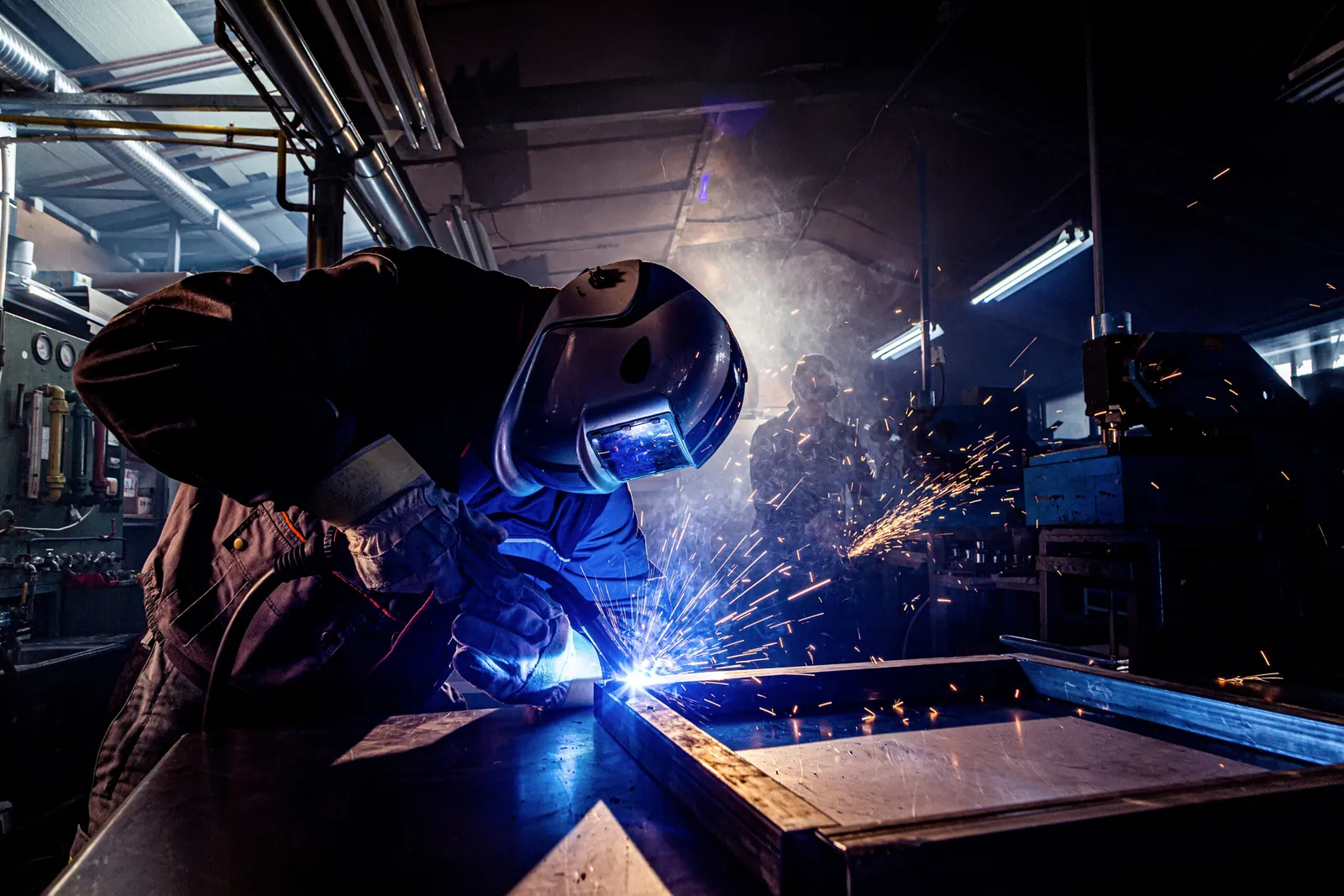
For example, sensors can now be mounted directly on existing equipment to listen to the sound pattern of a weld as it is made. By analysing subtle frequency variations in the sound of molten metal entering the weld pool, on-premises AI models can identify problems such as porosity or lack of fusion in real time, including defects invisible to the naked eye. This is a highly practical example.
The system does not require expensive welding power sources or robots to be replaced. It is a tool that complements the existing process and is mounted directly on the equipment welders already use. It provides immediate, actionable feedback on the shop floor, allowing corrections to be made before a component reaches the formal inspection stage. All data stays local, and the system operates without any reliance on a cloud connection. It is integration, not replacement.
A roadmap for metalworkers
If you are wondering how to get started, the road to implementing AI does not have to begin with a huge investment. It can start with a single persistent problem and a step-by-step plan to solve it.
Step 1: Start with a real problem, not the technology
The first question should not be “How can we use AI?”, but rather “What is our biggest operational bottleneck?” Is it inconsistent quality in a particular component? Unplanned downtime on a critical machine? Inefficient material use on the laser cutting machine? Identify a single, significant problem that, if solved, would deliver a clear return on investment.
Step 2: Check your data, even if it is ‘messy’
AI needs data. Take stock of the data you already have. This could include sensor logs from a CNC machine, quality control reports from an inspection station or production schedules from your ERP system. The data does not have to be perfect, but you do need to understand what you have, where it is and what condition it is in. This initial assessment is crucial in determining whether an AI project is feasible.
Step 3: Choose the right integration tools
You do not need to replace your legacy systems entirely. Modern AI tools can be integrated in various ways. Application programming interfaces can act as a bridge between old software and a new AI application. For older equipment with no digital outputs, retrofitting modern sensors to generate data is a cost-effective first step.
Step 4: Test in a sandbox, then roll out in stages
Do not roll out a new AI system across the entire shop floor all at once. Start with a pilot project in a controlled environment, a sandbox. Test the AI model, validate its performance and iron out any teething problems. Once it has proved its value on a small scale, you can implement it in stages, making sure day-to-day operations continue to run smoothly.
Question about this story? Ask your question
Keep following this
Get an email when a new story is published. No account needed.
- ThemeFrom design to digital production
- SubjectSoftware