











Speed up production with an AI-powered laser welding cell
Text Valérie CouplezImage TRUMPF
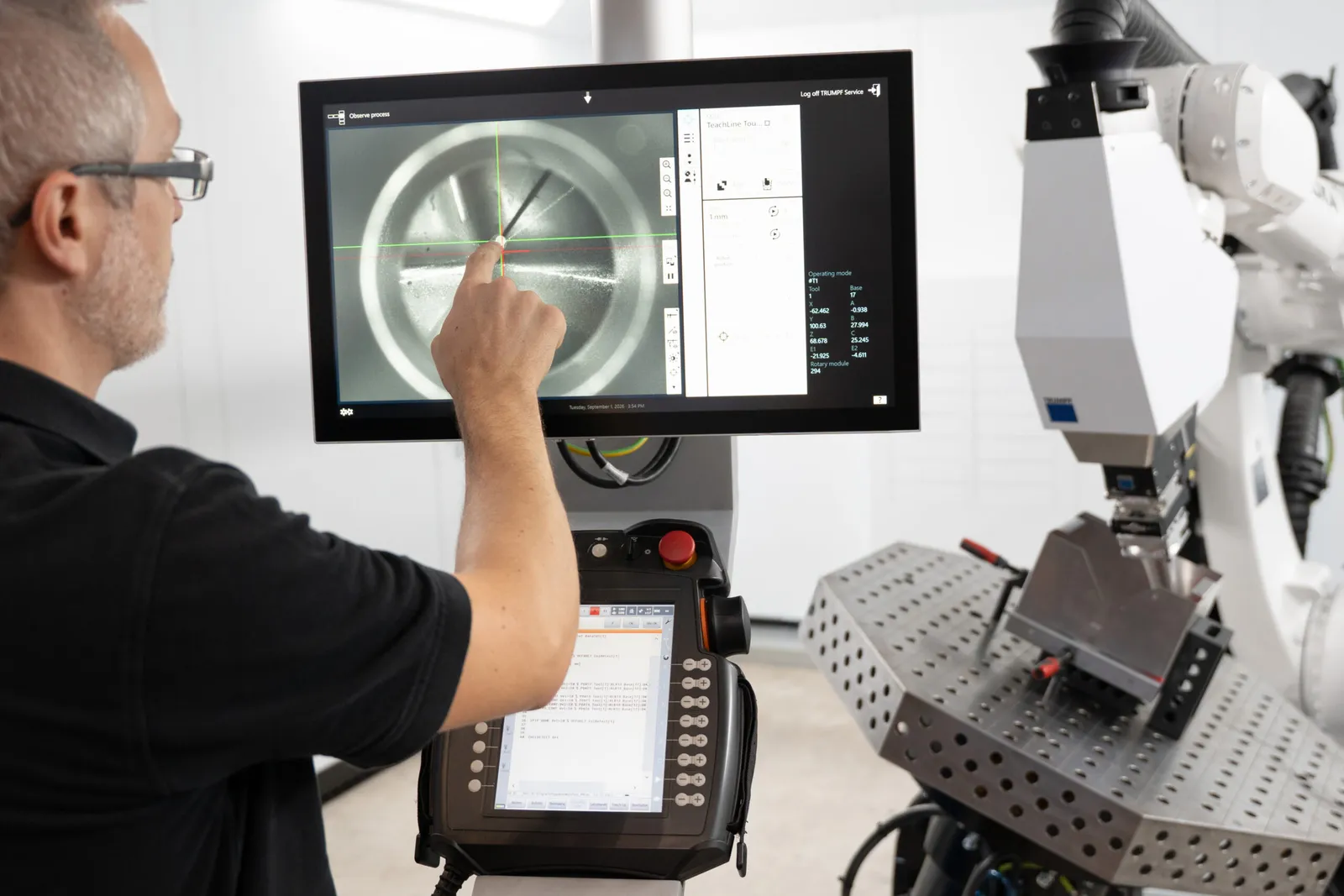
A shortage of skilled labour, frequent changes to parts and limited production space pose challenges for many manufacturers. At EuroBLECH 2026, TRUMPF is unveiling, among other things, the new TruLaser Weld 3000, a compact robotic welding cell that can be programmed significantly faster thanks to AI and takes up very little space. “The TruLaser Weld 3000 offers a competitive edge, particularly for companies producing high-quality sheet metal assemblies and enclosures in small batches with a wide range of variants. The machine ensures stable processes and short cycle times, giving production a high degree of flexibility,” says Moritz Berger, product manager at TRUMPF.
The new TruLaser Weld 3000 can be programmed directly at the machine in the conventional way, or offline using TruTops Weld software, for example from the office. This is particularly advantageous when working with parts that change frequently: employees can create new programmes on a computer while the machine continues production. In addition, welding programmes based on CAD data can be created significantly faster than with conventional programming. The ‘TeachLine Touch’ function can then be used to correct minor deviations. Welding points can be moved easily by tapping the machine’s screen. This reduces programming and set-up time by up to 50%. Corrections are even easier with the ‘TeachLine AI’ function extension. An AI-based process detects deviations in the welding points and corrects the robot path based on the actual configuration of the part. This allows the system to be set up more quickly for new parts. Another advantage: even less experienced employees can operate the laser welding cell.
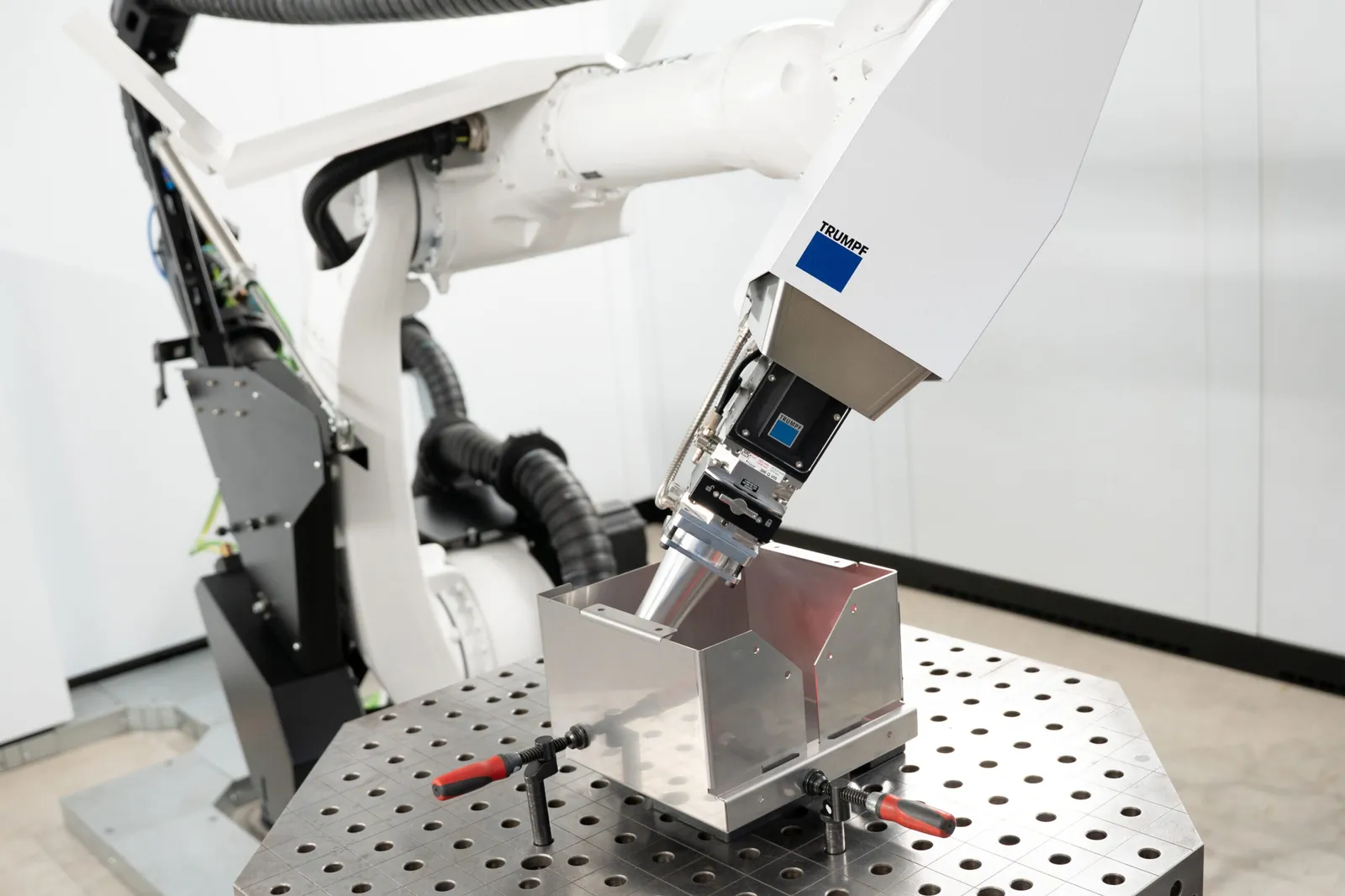
Smaller welding optic expands the range of parts that can be processed
A newly developed welding optic, around 40% smaller, expands the range of applications for the TruLaser Weld 3000. Its compact design enables the welding robot to reach even hard-to-access areas inside a part, such as the interior of deep enclosures, crates or boxes. This allows users to automate production of a wider range of parts and reduce manual finishing.
TRUMPF relies on proven laser welding technologies to ensure process stability and weld quality. These include BrightLine Scan, which combines a high-frequency scanner with motorised focusing. This enables wider gap bridging of up to 0.4 millimetres and wider weld seams for improved tolerance compensation. The BrightLine Weld function splits the laser power between an inner and an outer core in the laser light cable. This reduces spatter, particularly during deep welding, and ensures high-quality results. For larger gaps of up to around 1.5 millimetres, or materials requiring filler metal, FusionLine combines the laser with welding wire for targeted material deposition.
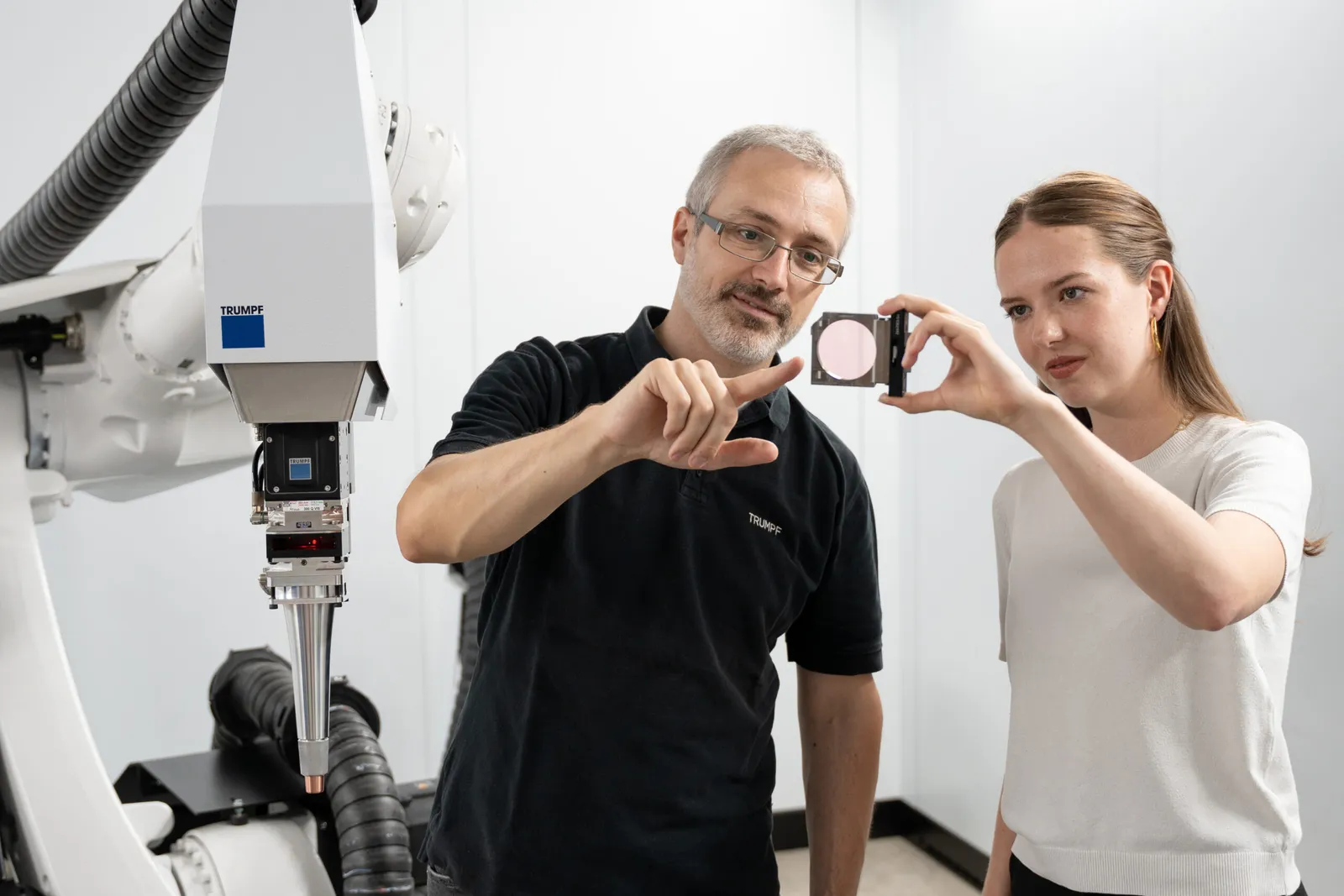
Small footprint, great flexibility
The protective enclosure of the TruLaser Weld 3000 has a footprint of 3.65 x 3.65 metres, making it around 24% smaller than the smallest version of the TruLaser Weld 5000. This makes the laser cell ideal for cramped production environments. Despite its compact design, the machine can process parts the size of a pallet, thanks to a KUKA Iontec robot with a reach of 2,100 mm.
For positioning parts, users can choose between a conventional welding table, a tilting rotary positioner or a compact rotary changer for loading and unloading in parallel with production. With a laser power of 3 or 4 kW, the TruLaser Weld 3000 welds stainless steel and structural steel up to 8 millimetres thick, as well as aluminium up to 6 millimetres thick. Typical applications include equipment and plant engineering, sheet metal parts for data centres, medical technology, and the kitchen and food industries.
EuroBLECH stand numbers H11-B70, H11-B94
Question about this story? Ask your question
Keep following this
Get an email when a new story is published. No account needed.
- ThemeReliable and productive welded joints
- SubjectSheet metalworking