











Grooving now possible on small diameters: successful tests on an endoscope component
Text Johan DebaereImage Horn/Sauermann
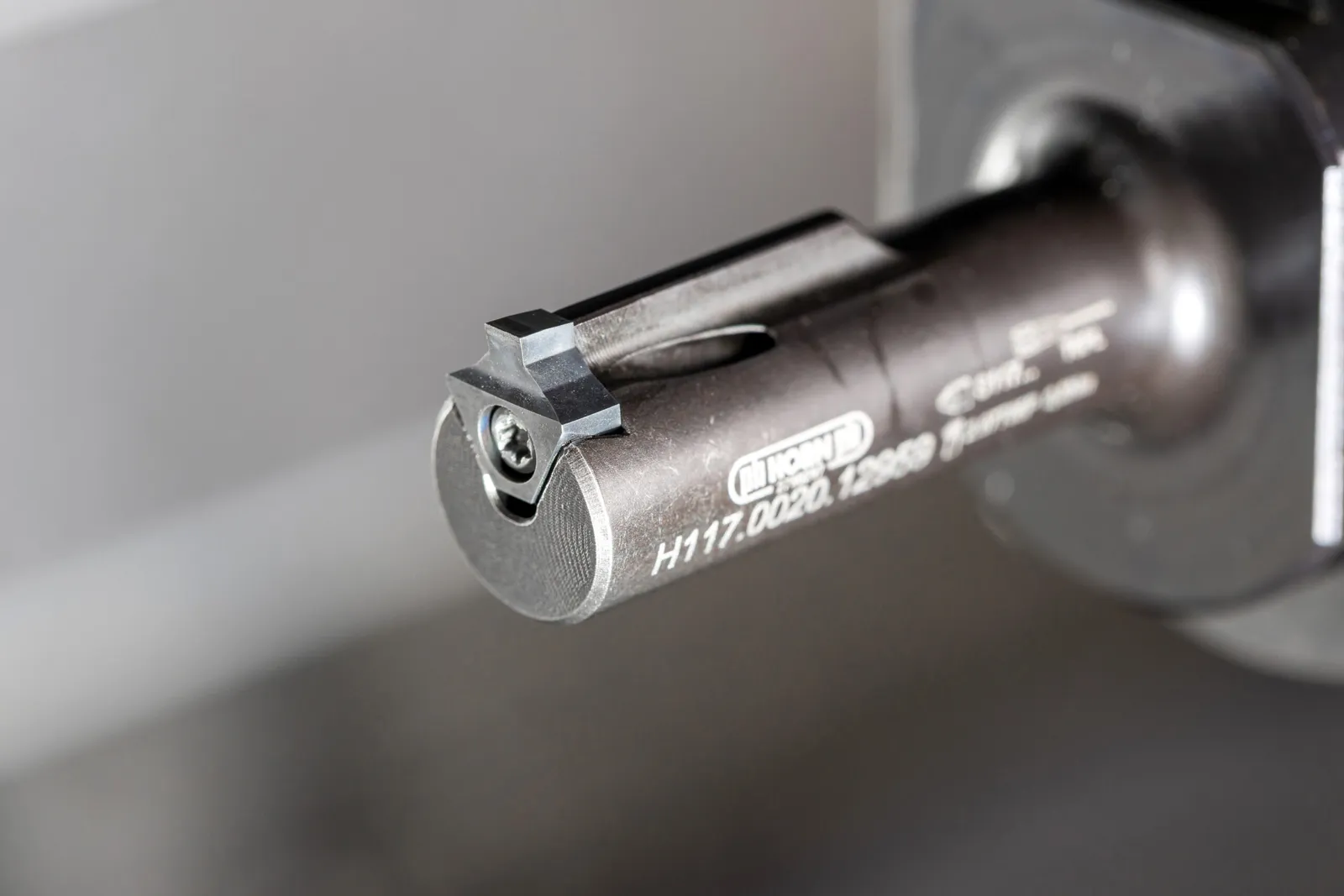
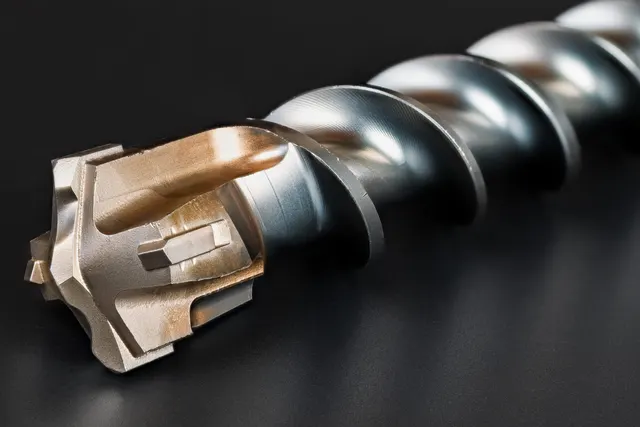
Narrow grooves, long tool life and a favourable cost per cut? With the expansion of its grooving system, Horn shows how the process can be used economically on small diameters. The tooling specialist sought partners to put the solution to practical use in the production of special components. Contract manufacturer Öschger (Emmendingen) tested the system over an extended period while producing a component for medical endoscopes and was impressed with its performance.
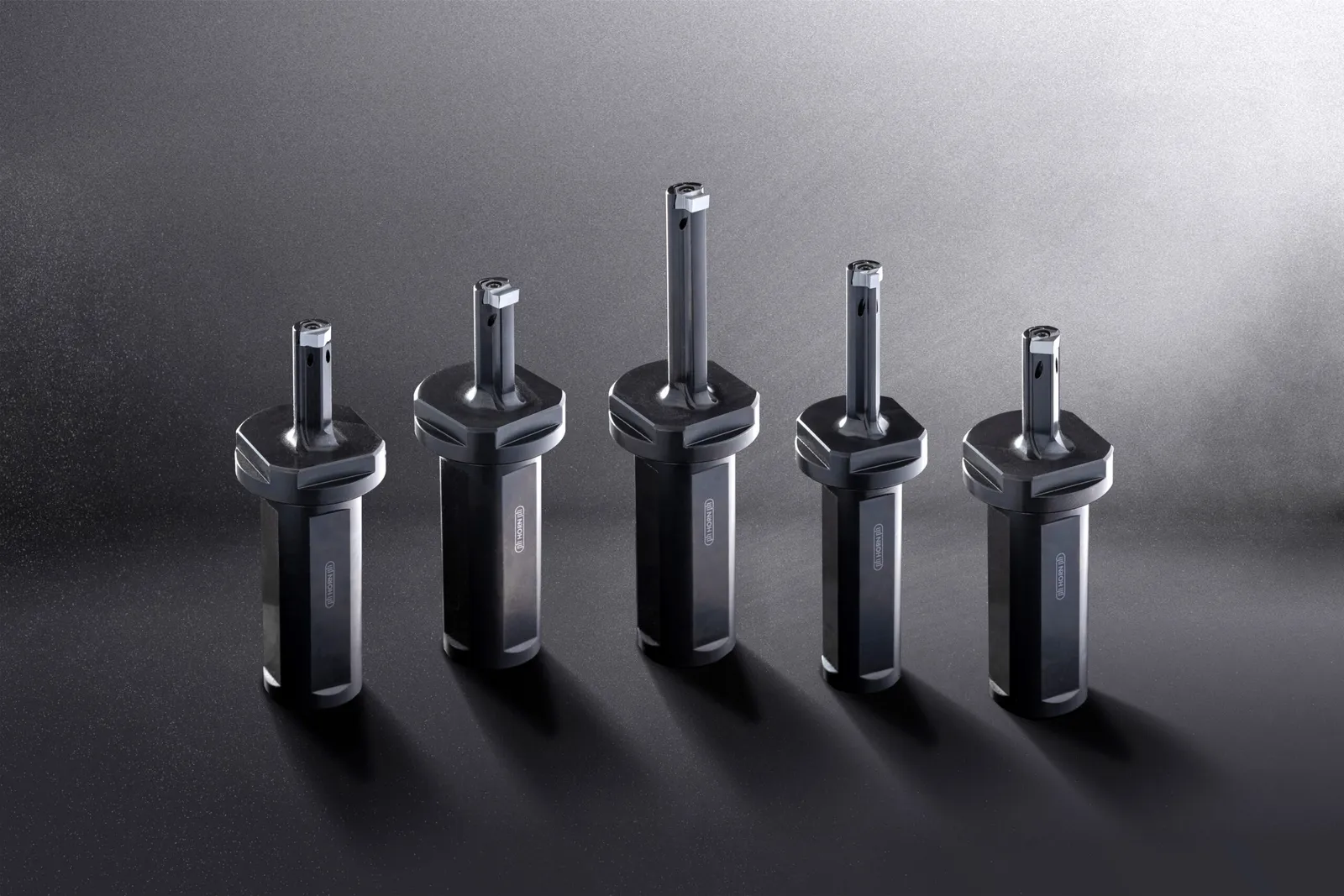
HORN had often been asked by the market whether its existing System 117 grooving system could be extended to cover smaller bore diameters. For applications with a diameter below 14 millimetres, users had to rely on Supermini 105 (from 6 millimetres) and Supermini 110 (from 9 millimetres). The latter system, however, resulted in considerably higher tooling costs. HORN launched a new development project with the aim of extending the application range of System 117 to diameters from 9 to 14 millimetres. Naturally, the requirements were demanding. The solution had to integrate into existing processes, be reliable and reduce the cost per component. It was not to be a special tool, but a standard solution as an alternative to System 110. By using the familiar System 117, production, handling and application had to remain as straightforward as possible.
Teamwork pays off
Development at HORN is a team effort, so several departments were involved in this project. Product management took on the role of initiator and coordinator, while the design department carried out basic research and feasibility studies. This led to the development of new clamping holders and corresponding inserts. R&D analysed holder stability using FEM calculations. Production and automation specialists were also involved at an early stage. One team focused on the safe handling of the small inserts, the clamping screw design and the specified tightening torque. Another team was responsible for automating the grinding processes to ensure reproducible quality. The holders were manufactured in-house. Close collaboration between everyone involved resulted in a solution that makes it possible to extend the application range of grooving system 117.
Tested in practice
Following development and the production of prototypes, the solution underwent thorough preliminary testing at HORN’s own test centre, like any other new tool. The tests were successful, so the sales team sought partners to put the tool through its paces in practice. This led them to Öschger, a specialist contract manufacturer of demanding components for medical technology (ISO 13485) and CNC precision components for other sectors. Together with Oesterle+Partner, the company also specialises in manufacturing live tooling for CNC lathes.
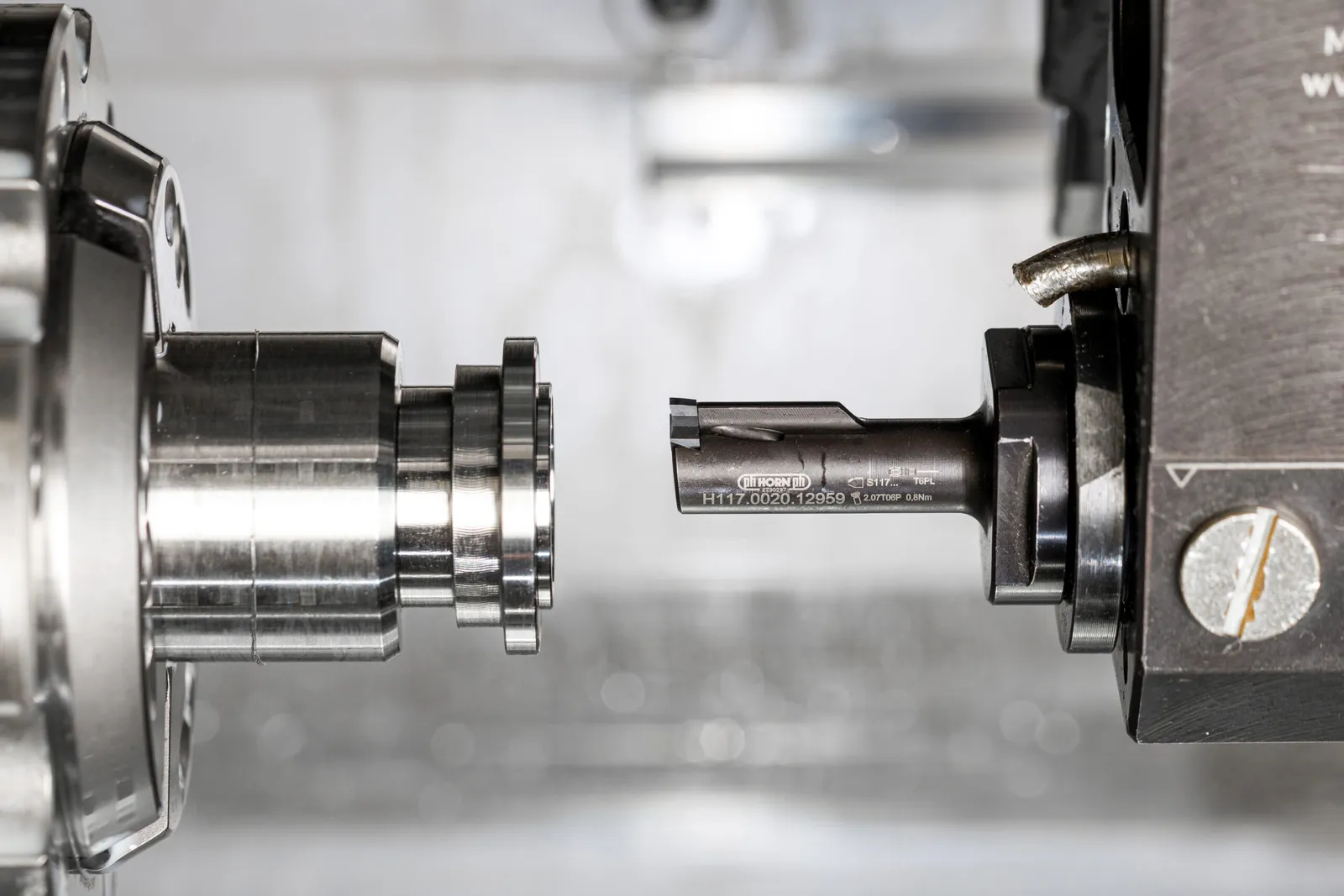
“We produce complex components to tight tolerances and consistent quality, from individual parts to series production. One example is a central component of medical endoscopes. Made of stainless steel, this component was ideal for the test phase. It has an internal diameter of 13 millimetres. The 2-millimetre-wide, 10-millimetre-long keyway also has two defined 45° chamfers towards the internal diameter,” explains Clemens Fürderer, head of the Turning Technology team at Öschger. “Previously, we used two Type 110 tools to produce this component: one for grooving and another for chamfering the edges. HORN has now supplied a complete solution, combining grooving and edge chamfering with a single insert in the same process.”
Successful development
At Öschger, they were already convinced by the tool’s strong performance after producing the first batch of components. “The tool we used previously achieved a tool life of just under 1,000 grooves. We have now cut 2,500 grooves with the new tool and can see no wear on the cutting edge,” says Öschger. “We are confident it will cut at least another 2,500 grooves.” A major advantage is the stability of the holder system, as well as the internal coolant supply directly to the cutting zone. “That performance is important, but this tool has also significantly reduced our tooling costs,” concludes Clemens Fürderer. One reason is that considerably less carbide is used for the insert.
Significant cost reduction
The tests show that this development can be integrated seamlessly into existing production processes and ensures a stable grooving process. With this expansion of System 117, HORN offers a practical solution for applications involving small diameters, where both process reliability and cost-effectiveness are important. Improved tool life, lower tooling costs and the combination of several machining operations in one tool deliver significant cost savings.
Een zakelijke vraag aan Paul Horn? Get in touch
Companies in this story

Keep following this
Get an email when a new story is published. No account needed.
- ThemeGetting more from machine tools
- SubjectTools
- CompanyPaul Horn