











The next steps in handheld laser welding technology
Text Valérie CouplezImage CNC-Europe
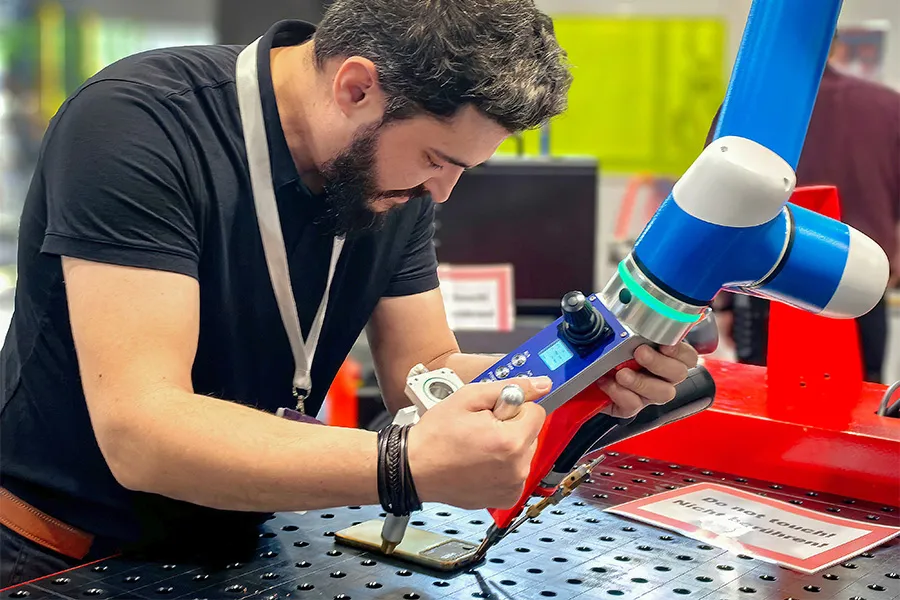
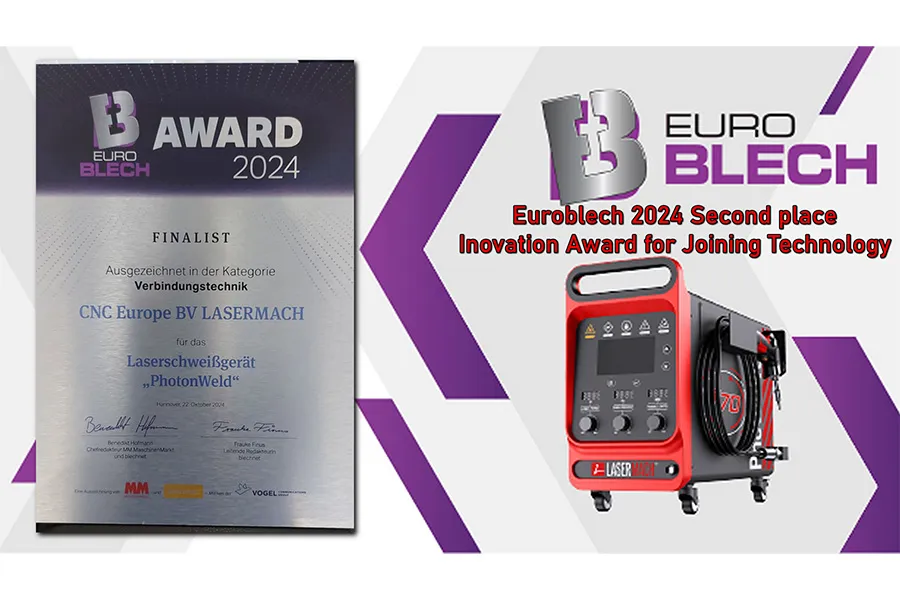
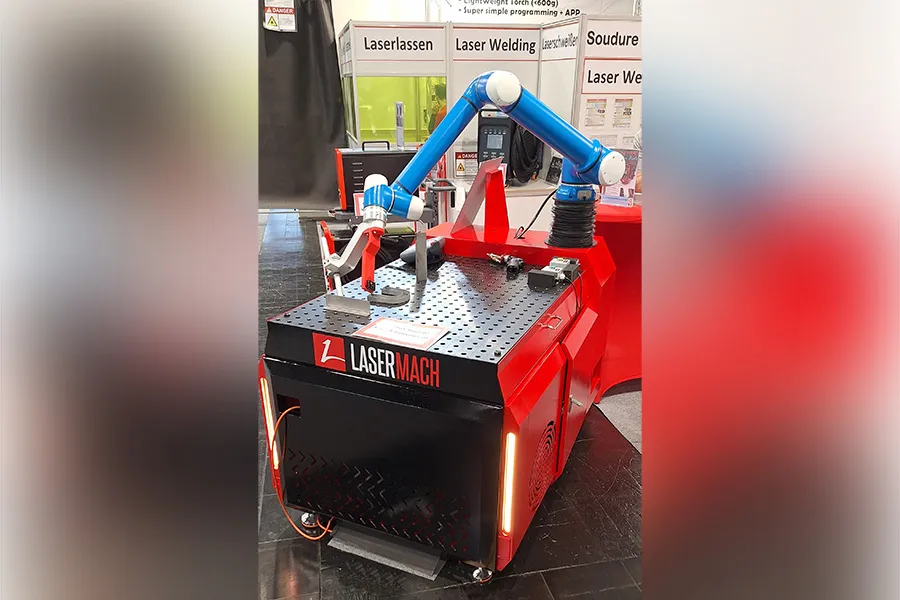
‘Because it’s simply better.’ That is why Lasermach’s handheld laser welding machine made it onto the stage at the EuroBLECH Awards in the joining technology category, without a major campaign or a push to drum up votes. At the show, the company also unveiled the next best thing: integration with a cobot. But this one can position itself with micrometre accuracy and allows the operator to take over flexibly whenever needed.
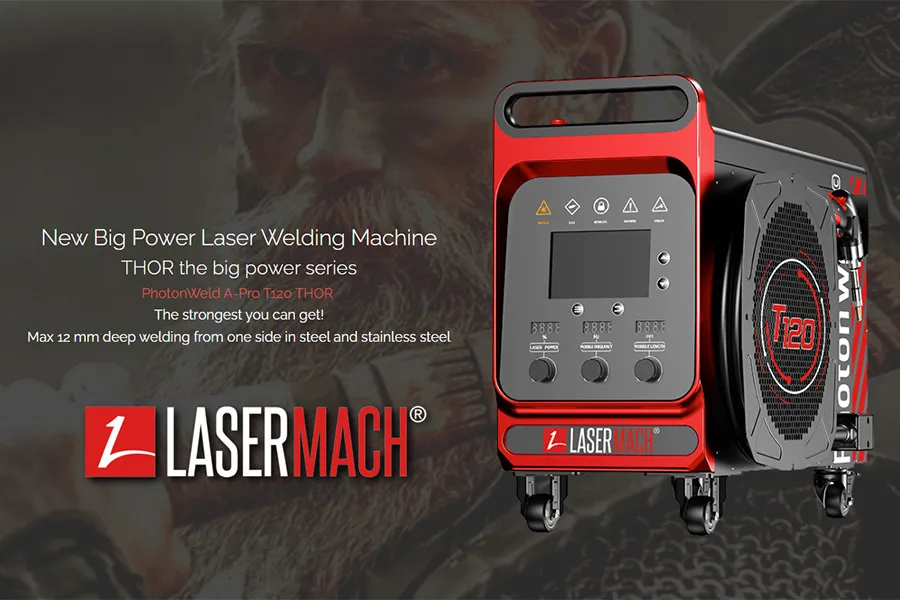
Visitors to Lasermach’s demo room in Mouscron will see a host of PhotonWeld machines ready for dispatch. The labels show destinations including Liège, Roeselare, France, Denmark and Hungary. “They leave here for every corner of the world,” says Patrick Favoreel, managing director of CNC Europe. “The biggest bottleneck is us. We don’t ship a machine until the customer has completed mandatory training in laser welding. That’s partly to teach them how to operate the machine, but above all to instil the necessary safety measures. The beam is dangerous to the eyes. The welder will be wearing protective glasses, but everyone else working nearby is also at risk because the beam is invisible. That’s why the training is compulsory. We don’t want any trouble.”
Up to 12 millimetres deep
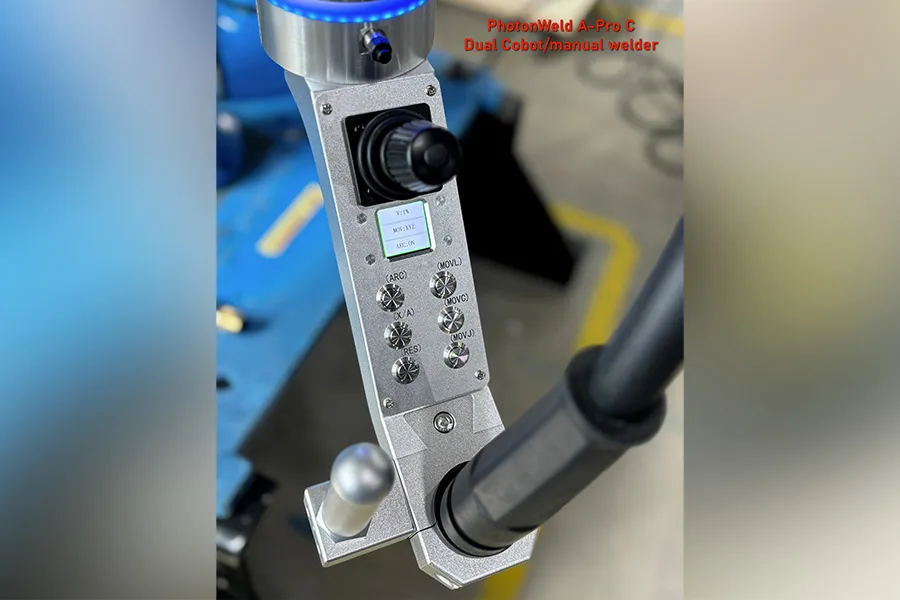
The latest model, unveiled at EuroBLECH, is the Lasermach PhotonWeld A-Pro T120, where 120 refers to the penetration depth. “We can now reach 12 millimetres. That opens up applications in railways, shipbuilding, bridges and more,” Favoreel continues proudly. “Our focus is increasingly on the heavy-duty segment. This is where our machines can make an even greater difference thanks to their superior cooling and light intensity. Normally, when the laser beam’s heat vaporises the metal, gas inclusions form, even more so than with conventional welding processes. After a year and a half of development, we have found a solution.
The results now show fewer gas inclusions and therefore better weld quality. This is a game changer,” Favoreel predicts.
Cobot with micro-positioning
It is no surprise, then, that the machine attracted a great deal of attention at the recent EuroBLECH. But there was a second crowd-puller alongside it. “Automation is an obvious next step for handheld laser welding too. But it requires greater attention to positioning. A conventional weld seam is a few millimetres wide. Ours is an extremely fine weld, just a few tenths of a millimetre wide. That calls for extremely accurate positioning.” By adding a joystick, along with a few features they are keeping under wraps, the team in Mouscron can achieve an accuracy of 1 µm. The joystick moves in the X, Y and Z directions, making operation straightforward.
Flexibility is key
A second priority was to ensure flexibility, first through quick teach-in programming. The cobot was also mounted on a 400-millimetre servo lift at the welding table. “This gives us two positions, up and down, so it can laser-weld both small and large workpieces.” The cobot may not yet be able to reach every position. In that case, you need a system that the operator can take over easily. CNC Europe used a 3D printer to build its own prototype. “With the press of a button, the operator can take back control of the welding torch. The simpler, the better. And the solution works with all our PhotonWeld machines. We can also fit our kit to existing robot and cobot solutions without much expense,” Favoreel adds.
Question about this story? Ask your question
Keep following this
Get an email when a new story is published. No account needed.
- ThemeReliable and productive welded joints
- SubjectLasers