











Smarter designs with profiles thanks to tube lasers
Text Valérie CouplezImage iStock
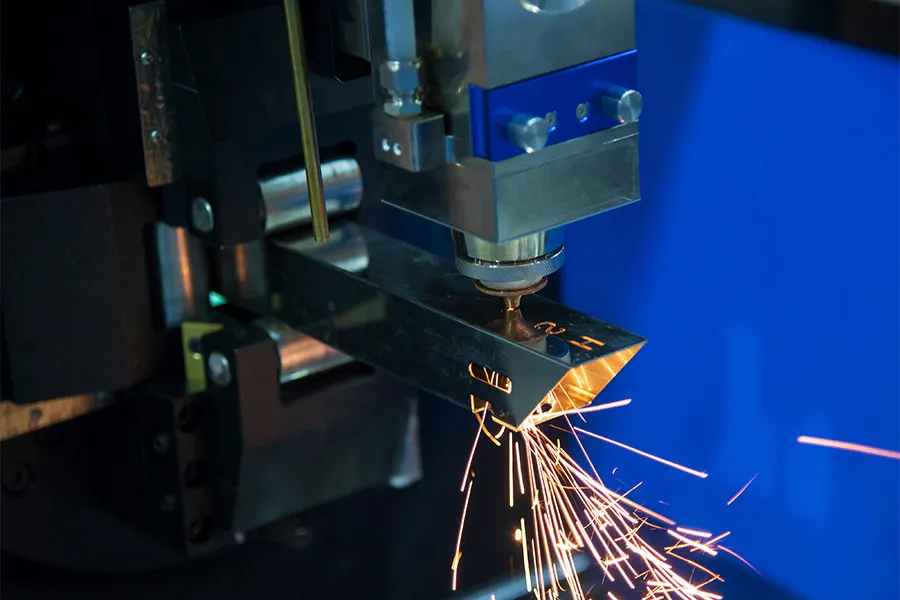
One of the fastest-growing markets in metalworking is the laser cutting of tubes and profiles. This process gives manufacturers the opportunity to create smarter structures: stronger and more attractive, because they can be made with far less welding, or even none at all. That is an advantage at a time when good welders have become a rare breed. Even in tube laser cutting, fibre lasers have now captured the bulk of the investment market. But developments in automation and software are at least as important, bringing these machines within reach of smaller businesses too.
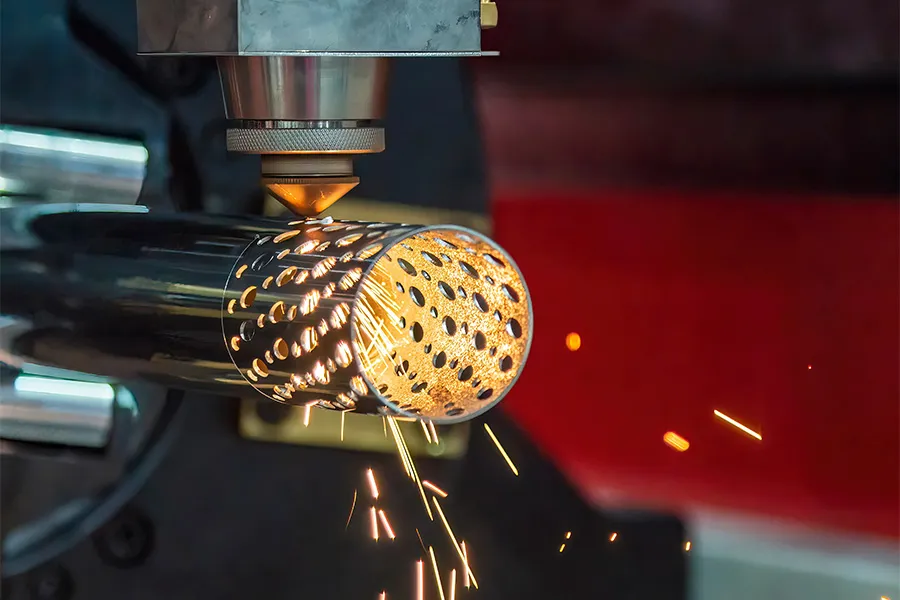
Mechanical engineers are well aware of the benefits of using cut-to-length tubes and profiles to construct frames. A laser can cut a wide variety of shapes from a profile or tube with millimetre precision, making it possible to create innovative joints that fit together seamlessly. They deliver an excellent strength-to-weight ratio and, increasingly important today, an attractive appearance. Many types of joints and assemblies are possible, with tubes or profiles providing equivalent rigidity, strength and alignment. But how should product designers decide which option is best?
A more complex operation
Until a few years ago, the benefits of using a tube laser often had to compete with the drawbacks: the need for specialised tooling and features, and the larger stockholding required. This led to a more complex logistical operation on the shop floor, especially for companies that also process a lot of sheet metal. The variety of materials required for fabrication and assembly is difficult to avoid. Whatever the design, the tubes and profiles used must be able to withstand the weight and pressure loads of the finished product. These requirements determine their thickness and length, the dimensions of each individual piece, the shapes to be cut, machined or formed, the holes and features required, and, of course, how the pieces will ultimately fit together.
Especially for more challenging designs
This is a more complex puzzle to solve than the conventional sheet metal cutting and bending work with which most metalworking companies are familiar. This is especially true of designs that go beyond the simplicity of a basic rectangle joined on all four sides. When compound angles are involved, even the most experienced saw operator can make a mistake in the set-up, material positioning and/or cut. And that is only the first step. The cut-to-length pieces then still need to be clamped correctly to add the holes and slots. Some also need to be tapped…
Once all the machining operations have been completed, welders must hold all these sometimes small, oddly shaped pieces together for welding.
It was a challenge few companies were willing to take on. As a result, many designs that could have benefited from the addition of tubes and profiles continued to be produced in the conventional way.
Evolution into a multifunctional tool
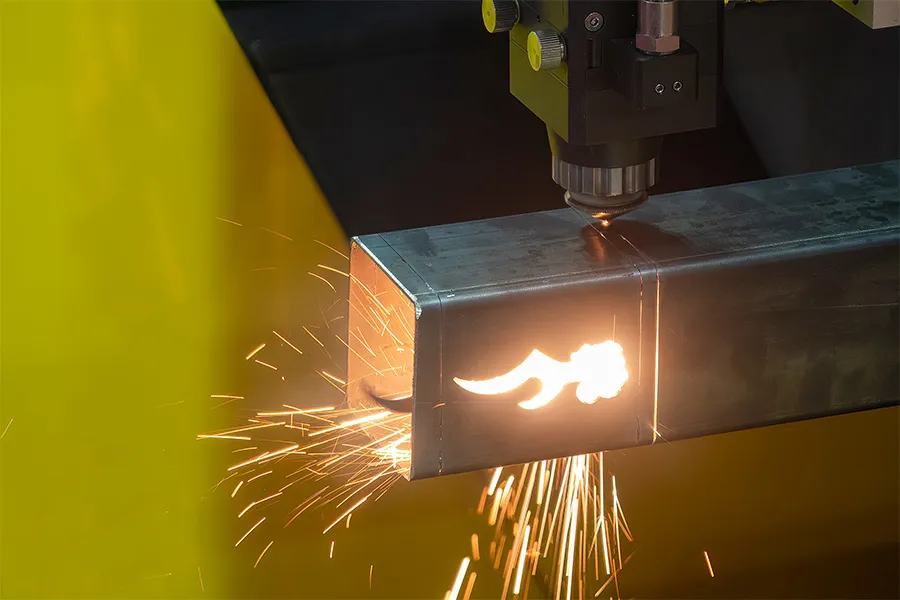
Soon after flatbed lasers were introduced in the 1970s and 1980s, experiments began with laser light for cutting profiles and tubes too. It started simply, with a holder added to the machine to keep the tube in place during cutting. Rotary attachments followed, allowing the laser cutting machine to position the tube automatically for drilling holes. This eventually led, in the 1990s, to the introduction of the first laser cutting machine designed specifically for cutting tubes and profiles.
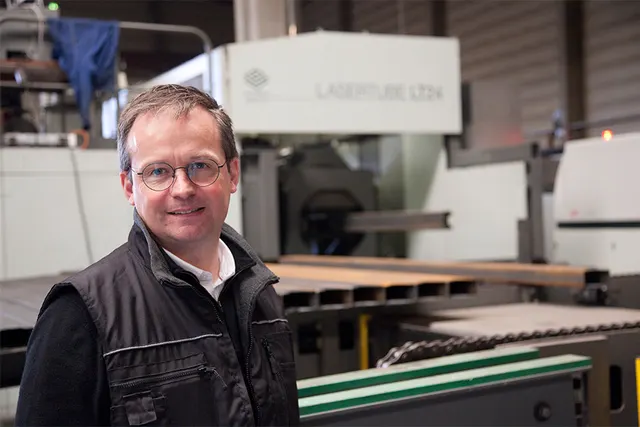
But today’s machines bear no resemblance to those early models. They enable operators to complete the entire fabrication process in a single set-up. They can now also process extrusions, structural components and open profiles such as C-channels and angles. Once a bundle of material has been loaded automatically into the tube laser, the machine trims it, cuts holes, slots and all the required features, and of course cuts the workpiece to length. Some machines can also cut at an angle and tap threads, eliminating the need for secondary operations.
In short, a modern tube laser is a multifunctional machining centre that makes interlocking joints possible, while also simplifying downstream assembly and welding processes.
Design software tailored to tube lasers
So much for the advances in hardware. To make full use of its potential, the software must support all these sophisticated features. This calls for CAD/CAM software designed specifically for creating components and assemblies, so that cut-to-length tubes and profiles can be integrated seamlessly, without the logistical nightmare of the past. Just as a CAD/CAM package can help you unfold 3D drawings into sheet metal parts, this software can reduce an assembly to straight tubes and add all the necessary cut-outs. Frames can be designed to be self-supporting, so welders no longer have to hold them together or align them when it is their turn to work on them.
A tremendous boost to productivity
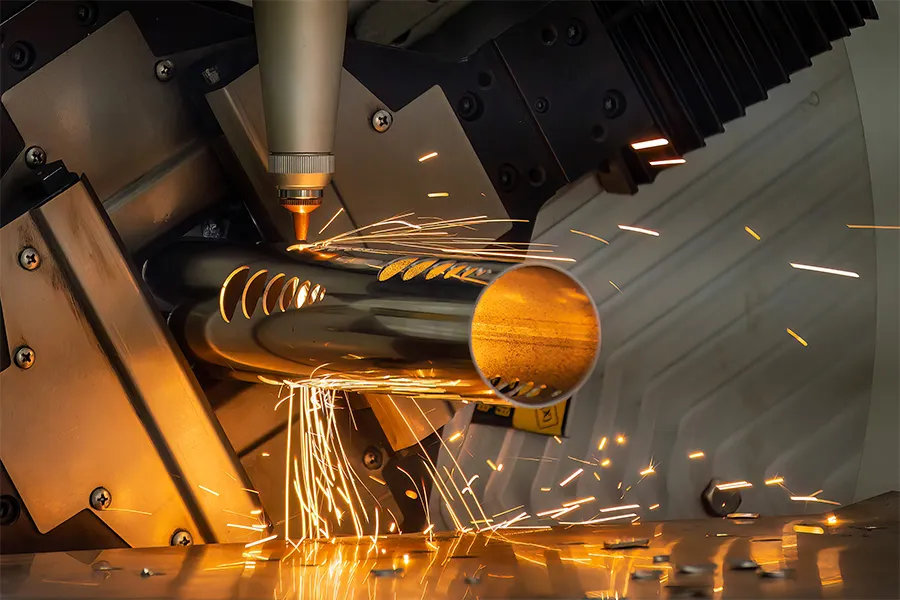
Bringing these two elements together makes a tube laser a particularly attractive tool for harnessing the strength of tubes and profiles to create robust, durable structures. Tube lasers can perform every step automatically, giving your productivity a tremendous boost.
The good news is that these systems now come with a price tag comparable to that of automated flatbed laser cutting machines. In other words, they are an investment within reach of smaller SMEs too, especially considering what they offer in return. Ultimately, the tube laser lowers the production cost of assemblies while delivering
higher production speeds. ■
Question about this story? Ask your question
Keep following this
Get an email when a new story is published. No account needed.
- ThemeFaster, more accurate sheet metal processing
- SubjectLasers